Pallets are used daily for transporting and storing a vast range of industrial items, including components and equipment. They may also be used to transport items from the manufacturer to the retail outlet including furniture, food items, books, farming supplies, auto parts, construction materials, boxed electronics and chemical products. Pallets come in various types, which partly drive the pallet’s ubiquity. There are plastic pallets, steel pallets, and wooden pallets – each with their strengths that serve specific needs within the industrial and commercial sector. Identifying the right type of pallet for one’s business can be daunting for those who aren’t aware of the benefits of each type. Does the business value durability over sanitation? What about the weight capacity of the pallet itself? What makes any of the three types different from each other, and what do these differences contribute to a business?
Wood Pallets
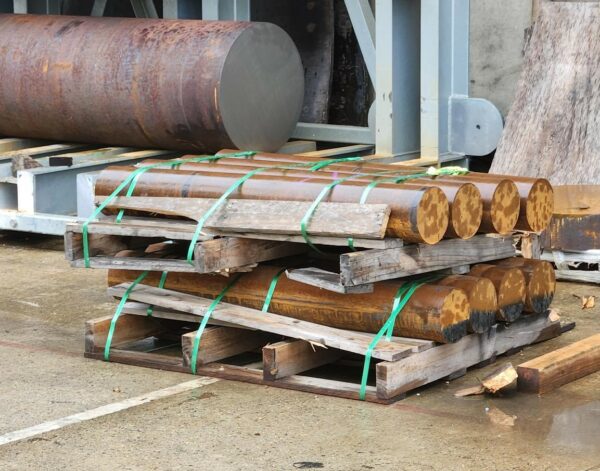
Wooden pallets comprise the majority of all pallets manufactured worldwide. They’re the least costly of the three types as well, with a wooden pallet costs a fraction of the selling price of a steel pallet, for example. This is true from the production line to the market; wood is cheaper than plastic or steel fabrication, which makes wooden pallets a cost-effective option for manufacturers and warehouse operators. Wooden pallets are also very easy to fix and replace, although their lifespan is short. Manufacturers design wooden pallets for light loads. The rating applies only to first-time use. While transporting lighter goods between sites and around site, most time the wooden pallet does the job very well. Steel pallets provide a certified solution for durable weather resistance and safe transport of heavy gear, and they can be reused repeatedly with heavy components.
Steel Pallets
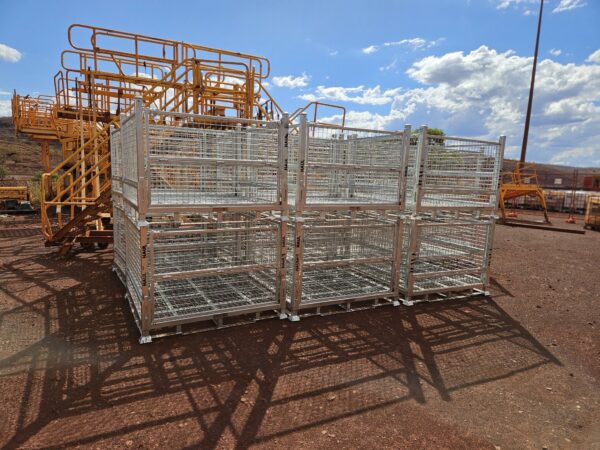
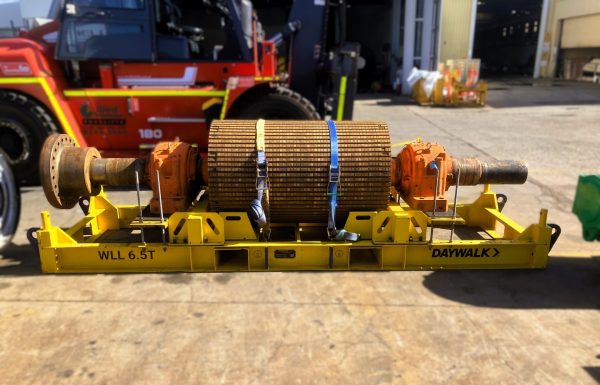
Steel pallets are the sturdiest of pallets. Despite being more costly than plastic pallets and hardwood pallets, if you are storing or transporting heavy equipment, steel pallets should be your only consideration.
In comparison to a wooden pallet, steel pallets offer safety and efficient handling, transport and storage for heavy loads:
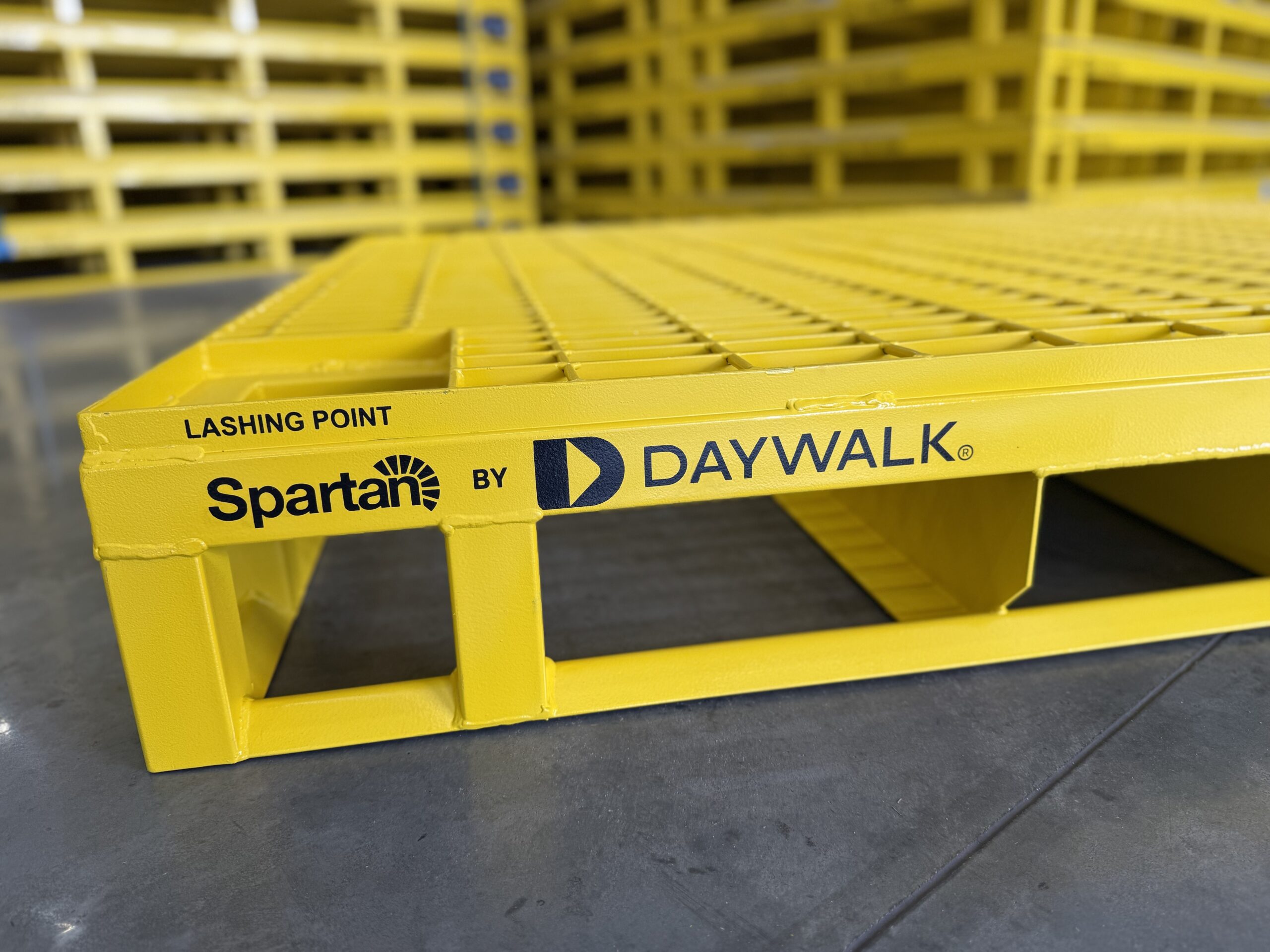
- The steel pallet’s heavy-duty welded construction means point loads and heavy equipment can’t damage or ‘pull up’ boards, look on a hardwood pallet.
- This welded grid mesh construction lets operators bolt and chock equipment to the steel pallets safely. Compared to unrated strapping and low-quality wooden pallets, this is the Chain of Responsibility-safe option.
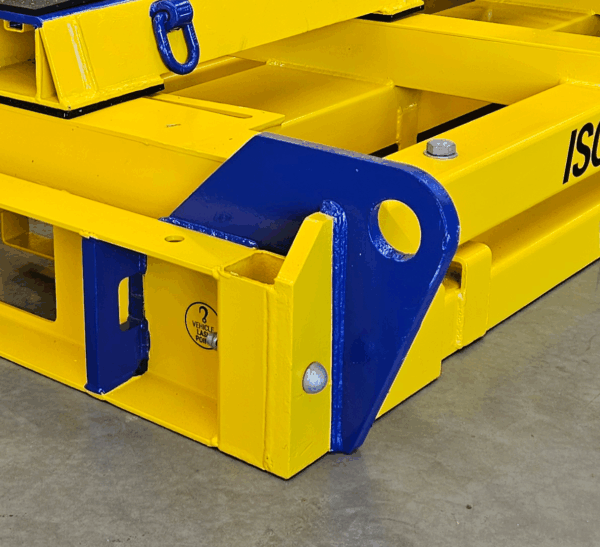
- The durability of the steel pallets allow for longevity, saving time and money long term, compared to the standard wooden pallet, which are more prone to breaking down when exposed to the elements. A 3-coat paint system on the steel pallet allows for durability.
Plastic Pallets
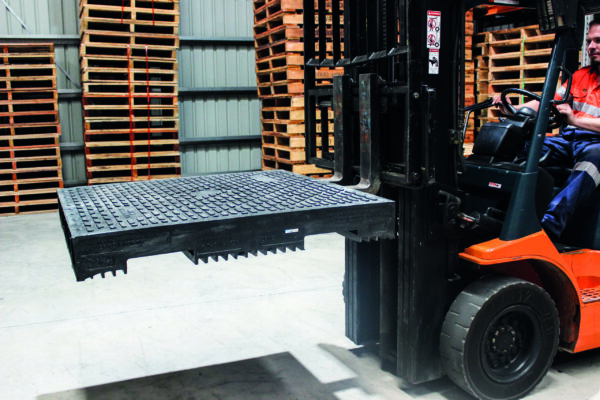
Plastic pallets are the middle child of the pallet family. They’re more durable than wooden pallets but not as durable as metal ones. Pallets cost more than wood, but they are less than metal. Manufacturers manufacture plastic pallets as a single, seamless piece with no moving parts, unlike wood or metal. Manufacturers assemble the wooden or metal pallet and craft the plastic pallet as a single seamless object. This makes the heavy duty plastic pallet resistant to stress and impact, as there are no nails or joints that can come loose. However, there are limits with the weight of items compared with steel pallet solutions.
What Type of Pallet Should You Use?
So, what type of pallet should you use? At DAYWALK, we typically recommend matching your component, intended usage, price-point and operational requirements to your choice of pallet type.
Wood and hardwood pallets for low-value equipment and short-term storage – suitable for short-term transport or storage with lower value components and parts. They are particularly vulnerable to wear and tear, breakages and damage from outdoor use, so consider this a short term solution that will need to be replaced regularly, and inspected before every use.
Plastic pallet bin for light or medium parts for outdoor storage – when termite-ingress, high rainfall and harsh weather conditions are a challenge for storing equipment outdoors, the plastic is a good, shorter-term option, due to its heavy construction and natural UV-resistant properties. For medium-duty loads, the plastic pallet is rated up to 6T static and 2T dynamic loads, meaning it fits between the wooden and steel pallet. If you are looking to safely store and restrain heavy equipment around 2T, without the heavy duty construction needed for large equipment or safe transport, the plastic pallet is perfect.
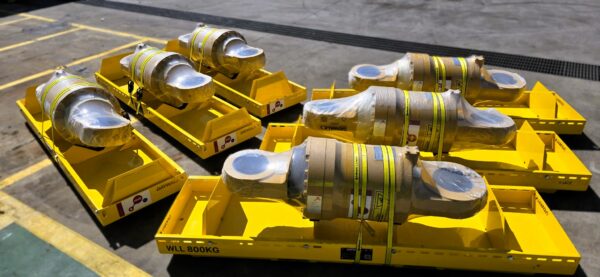
Steel pallets for heavy components and long-term transport or storage – these pallets offer transport certified assurance for the transport and storage of high-value components and critical spares. Offering a larger capacity and various dimensions from small to extra large components, DAYWALK’s range of steel pallets provide a long-term solution that complies with your CoR requirements for road safety.
Talk to the DAYWALK team of Technical Consultants to learn more about our range of wood, plastic and steel pallets to determine which is best for your operations.