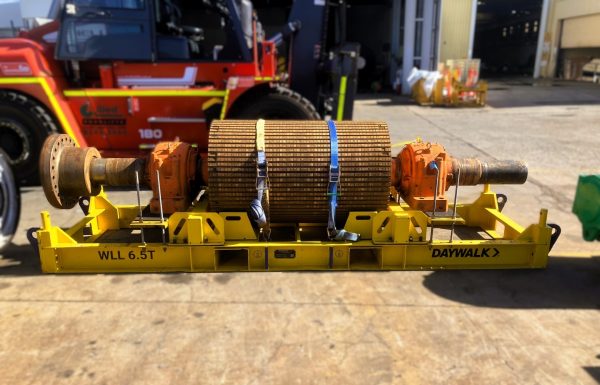
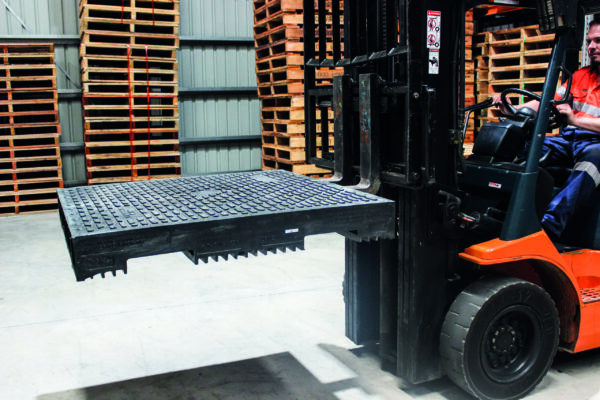
So, what is the difference between DAYWALK pallets and other pallets out there on the market? Why shouldn’t you just invest in one of the cheaper alternatives, or even manufacture your own frames?
Price is obviously part of the decision. But when you’re transporting heavy, high-value components, there is another question worth asking: What does the load rating actually mean?
A pallet might be advertised as a 3T or 5T pallet. But is that an indicative structural rating, or has the complete transport system been engineered and certified for the forces it will experience on the road? That distinction matters. A load rating isn’t always a transport rating. One of the main factors that sets DAYWALK apart is our promise to keep business moving. There are fabricators and suppliers in the market that provide an indicative load rating — for example, describing a pallet as suitable for 2T or 3T based on its construction or engineering calculations. That doesn’t necessarily mean the finished pallet has been tested and certified as a complete transport system for the forces it can experience during road transport.
For a heavy component sitting stationary in a workshop, the static weight might be the main consideration. But transport is different. The frame needs to support the component while it is being loaded, moved, restrained and transported. It also needs to account for forces generated when the vehicle accelerates, corners, encounters uneven roads or has to brake suddenly. That’s why a certified transport frame is about more than simply asking, “How much does it weigh?” It’s about asking, “How will the complete system perform when that load is moving?”
What Does Certification Cover?
DAYWALK transport frames are logistics engineered, rather than simply designed as structural steel products. Our independent certification process considers the requirements for the complete transport application, including the frame, load support and restraint arrangements. DAYWALK transport systems are engineered and certified against the relevant Australian load restraint requirements, including the Performance Standards defined in Schedule 7 of the Heavy Vehicle (Mass, Dimension and Loading) National Regulation 2018, as well as AS 3990:1993 where applicable.
The 2018 Load Restraint Guide is particularly important because it sets out performance requirements for securing loads during road transport. A transport system needs to be capable of keeping the load secure under the forces it may experience during normal and emergency driving conditions.
You may have heard DAYWALK talk about emergency braking as part of our product development process. This is important because a component that weighs several tonnes doesn’t simply exert its static weight on a pallet when a truck is travelling. If a truck brakes suddenly, the load wants to continue moving forward. The transport system needs to withstand the resulting forces and keep the component restrained.
This is one of the key differences between a pallet that is simply strong enough to support a stationary component and a transport-rated system engineered for road use. DAYWALK’s logistics engineering considers the forces specified by Australia’s load restraint requirements, including the forces generated when a vehicle has to stop unexpectedly.
DAYWALK Load Ratings: from 1T to 12T
DAYWALK’s steel pallet range provides transport-rated options from 1T through to 12T, giving customers a range of engineered solutions rather than requiring every site to build its own frame.
The range includes options from Spartan Duty pallets through to Heavy Duty Adapta pallets, with different configurations available depending on the component, handling requirements and application.
This is important because a 1T component and a 12T component shouldn’t automatically be treated as the same transport problem.
The component’s:
- Weight
- Centre of gravity
- Dimensions
- Shape
- Lifting points
- Restraint points
- Handling method
- Transport route
- Storage requirements
can all influence the right frame or pallet design.
For component transport, the right capacity is only the starting point.
Why CoR Compliance Matters
Certification also plays a role in Chain of Responsibility (CoR). Under Australia’s heavy vehicle laws, responsibility for a load doesn’t stop with the person who physically loads the truck. Different parties across the transport chain can have responsibilities relating to how a load is packed, secured and transported. That means businesses moving heavy components need to consider whether their transport equipment and load restraint systems are fit for purpose. DAYWALK certified transport frames are engineered to assist customers with their CoR obligations and Australian load restraint requirements. This can be particularly important for mining companies and OEMs where components are regularly moving between mine sites, workshops, repair facilities, warehouses and other locations. The frame becomes part of the transport system — not simply something used to hold a component while it sits in the workshop.
Certified Transport Rating
A certified transport rating provides an optimum specification for road transport equipment. The engineering considers the applicable transport requirements and the forces the system needs to withstand, rather than relying solely on its ability to support the component’s static weight.
For DAYWALK, certification is part of the engineering process, not something added as an afterthought. Our transport solutions are designed around Australian load restraint requirements and supplied with load guidance to help users correctly specify and use the system.
Why The Quality of the Steel Pallet Matters for Heavy Industry
Mining operations are a particularly good example of why the distinction between steel pallets matters.
A component might weigh several tonnes and be worth hundreds of thousands of dollars. It may travel long distances between a mine site and a repair facility, then return to site for installation.
During that journey it can be exposed to:
- Long-distance road transport
- Rough roads and vibration
- Repeated loading and unloading
- Forklifts and cranes
- Multiple restraint configurations
- Harsh weather and outdoor storage
- Frequent handling by different teams
The cost of getting the transport system wrong can be much greater than the initial pallet price. A failed pallet, damaged component or non-compliant load can create additional handling, repair costs and delays; and potentially contribute to a much larger operational problem. This is why mining organisations often need more than an indicative weight rating. They need confidence that the equipment they are using is fit for the transport application.
The same principle applies in Defence, where transport equipment may be supporting high-value, mission-critical assets and moving through complex logistics chains. DAYWALK supplies transport and storage solutions for Defence applications, with certified products designed around Australian load restraint requirements. In these environments, traceability, repeatability, safety and confidence in the equipment can be just as important as the initial purchase price.
DAYWALK Vs Other Pallets
A cheaper frame doesn’t necessarily represent better value if the rating is unclear, the equipment needs modification or the transport requirements haven’t been properly considered. Explore DAYWALK’s steel frame solutions to learn more about our certified products and load ratings.