Warehouse efficiency is about minimising time, cost, errors, and wasted movement for every order handled. Developing efficiency with warehousing is the difference between a warehouse that struggles to meet shipping deadlines — and one that consistently delivers ahead of schedule with fewer resources.
With rising transport costs, same-day and next-day delivery expectations, and tight labour markets, efficiency is a competitive necessity rather than a nice-to-have.
Why Focus on Warehouse Efficiency Improvements?
Australian warehouses that fail to optimise their warehouse operations risk losing customers to competitors who can ship faster and cheaper — so focusing on efficiency in warehousing is important for the business as a whole.
This article discusses ways to improve efficiency in warehousing, through better systems, warehouse storage and space optimisation. Because improving efficiency will also help boost productivity, safety and ultimately your bottom line.
Real-World Warehouse Efficiency Savings Example
Consider this:
In a warehouse facility handling 10,000 lines per day, shaving just 15 seconds off each pick saves over 400 labour hours per month. That’s the equivalent of more than two full-time employees worth of capacity freed up without hiring anyone new.
Efficient warehouses see lower overtime costs, fewer picking errors requiring rework, improved OTIF (on-time in-full) scores, and better customer satisfaction. These efficiency benefits compound over time as fewer mistakes mean fewer returns, less urgent freight, and stronger relationships with clients — which allows for increased profits and the potential for business growth.
Building Efficiency, Increasing Safety in Warehousing
In addition to this, there is generally less risk in an organised and efficient warehouse that’s equipped with the right storage systems, compliant racking and procedures to optimise efficiency.
Fewer rushed tasks, clearer aisles, and more predictable workflows reduce the risks involved in daily operations.
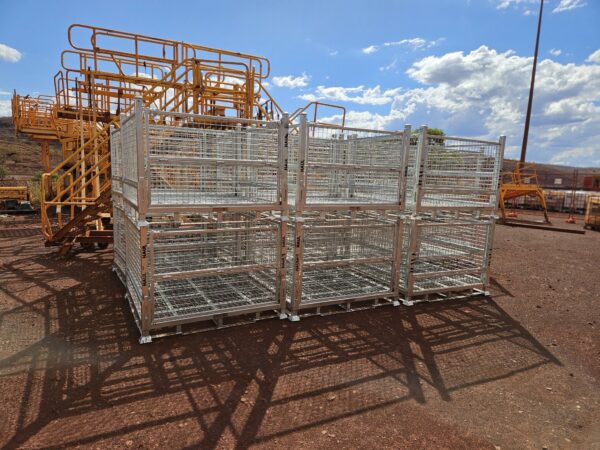
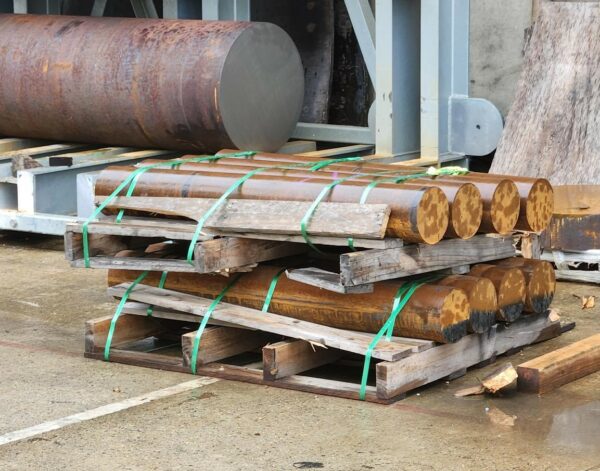
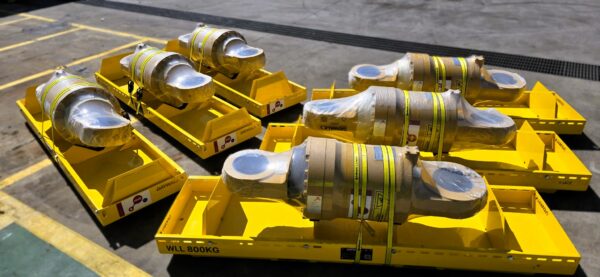
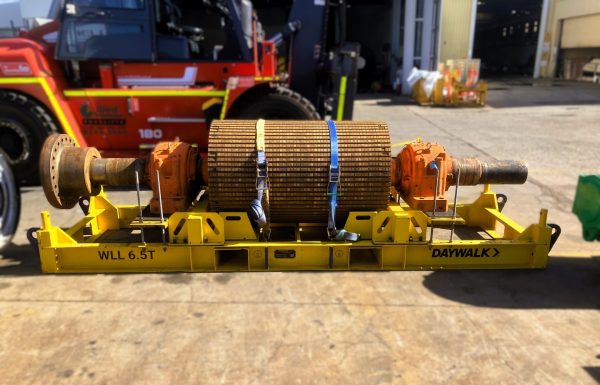
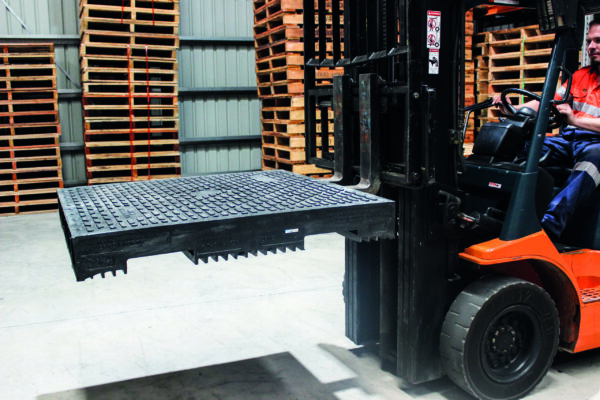
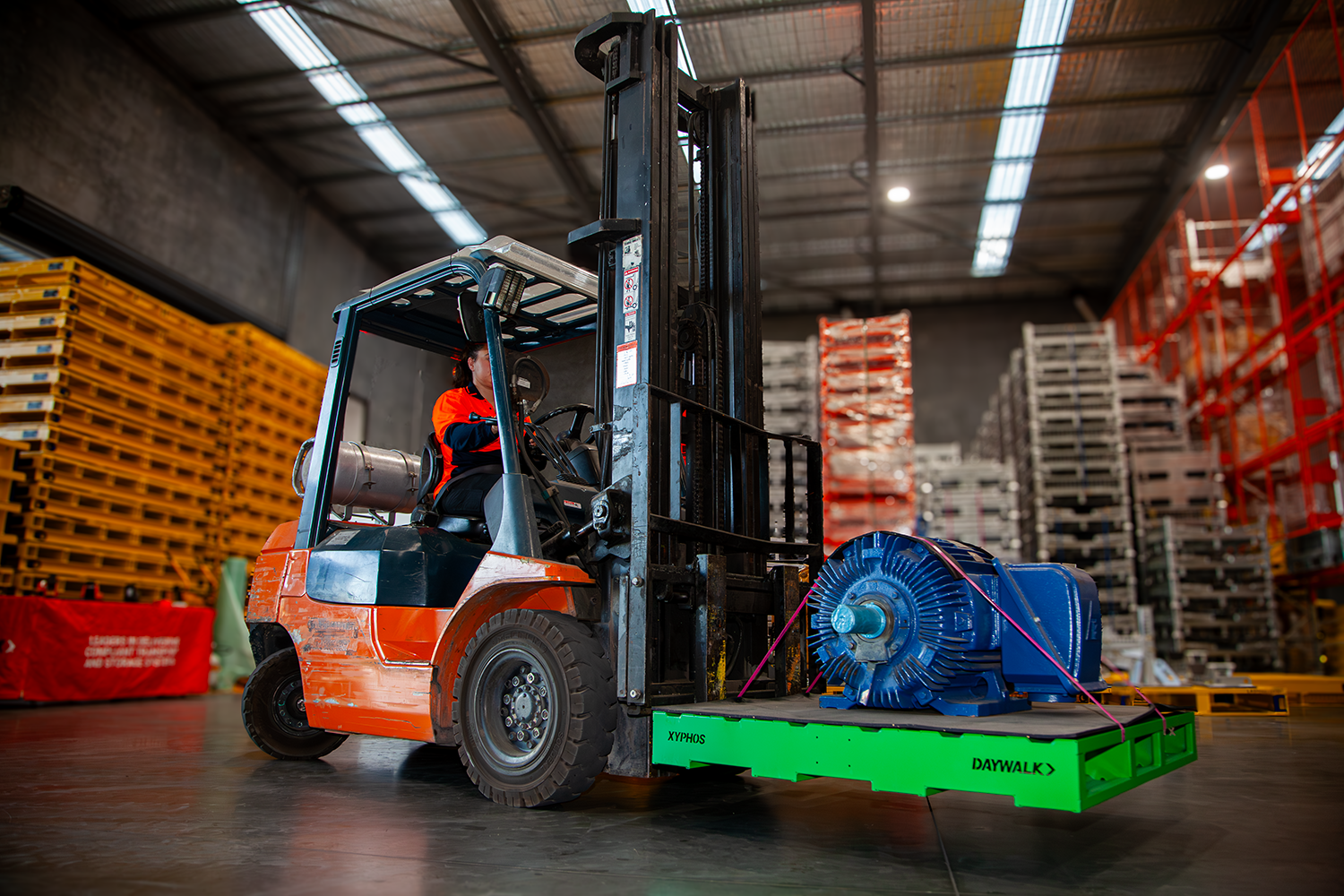
Choosing steel pallets over timber can also cut incidents that affect safety or productivity. Using steel cages for component storage can also be a faster and more effective method of warehouse storage, rather than needing to strap and restrap a pallet.
Some key points to consider when building efficiency and warehouse safety:
- Understand and track core KPIs so you can see progress and areas for improvement
- Design a warehouse that promotes efficiency and safe work practices
- Streamline and refine your processes from receiving, to picking, packing and dispatch
- Inspect and review your warehouse before updating operating procedures and other important safety and operational documents. This ensures continuous improvement
Did you know: The warehouse racking standards offer full details across the structural design, as well as the installation, tolerances, clearances, operation and maintenance. Read our blog to learn more.
Measuring Warehouse Efficiency: Core KPIs You Should Track
You can’t improve what you don’t measure. Here are some key measurements to track in your warehousing operations.
Order Picking Productivity
Depending on your operation type, you’ll want to track:
| Metric | Best For | Typical Benchmarks |
| Picks per hour (PPH) | Single-item orders | 80 – 120 (manual), 120 – 200 (voice/pick-to-light), 200 – 300+ (goods-to-person) |
| Lines per hour (LPH) | Multi-line orders | 50 – 80 (B2B wholesale), 80 – 150 (ecommerce with good slotting) |
| Units per hour | High-volume, uniform SKUs | Varies by handling method |
If you’re running a business-to-business operation with larger case or pallet picks, lines per hour often makes more sense. For ecommerce, picks per hour tells the clearer story due to the smaller order sizes.
Inventory Accuracy
Target 98–99% accuracy or higher. In operations relying on manual entries or paper processes, accuracy often sits between 85–95%—which sounds acceptable until you realise how much that inaccuracy costs in re-picks, stockouts, emergency freight, and lost sales.
Advanced WMS combined with scanning and cycle counting can push accuracy to 99.7 – 99.9%.
Order Cycle Time
This measures the time from order release to ready-to-ship. Best-in-class facilities achieve internal cycle times under 2.5 hours, with total order-to-ship times under 3.2 hours. Legacy operations often take a full day or more.
Space Utilisation to Improve Warehouse Efficiency in Australia
Track pallet positions used versus total capacity, and cubic utilisation of racking. Poor utilisation leads to longer travel times, congestion, and the temptation to lease additional space you shouldn’t need. Free standing cages, that can be stacked directly on the floor (as well as placed in pallet racking, if required) can also be a great space saving solution.
Important: DAYWALK steel cages are pallet racking compatible, and they can be folded down when not in use so it saves you warehouse floor space.
Cost-Based Metrics
Cost per order and cost per line let you validate whether process changes actually save money. Review these monthly. WMS providers regularly report 15–25% reductions in cost per order after implementation.
Quality and Safety Metrics for Warehouse Efficiency
Order accuracy (first-time correct lines), damage rates, and safety incidents are often overlooked but directly impact efficiency. Industry benchmarks for order accuracy typically range from 99.2–99.9%, depending on your industry and the scope of your business.
Build a simple KPI dashboard or spreadsheet that’s updated weekly and visible to supervisors and team leaders.
Designing an Efficient Warehouse Layout
Layout is one of the fastest and most durable levers for improving efficiency without adding headcount. Get this right, and every subsequent improvement multiplies.
What is the Golden Zone Concept?
The golden zone runs from eye level down to mid-thigh height. This is where high-velocity SKUs should live because picking from this zone is faster and safer — less bending, less reaching, less strain on workers.
Place your A-items (highest velocity) in the golden zone and closest to packing or dispatch areas. This single change can reduce average travel distance per pick by 30 –40%.
Traffic Flow and Equipment Considerations
Clear separation of pedestrian and vehicle traffic prevents accidents and congestion. Consider:
- Marked walkways with floor markings
- One-way forklift aisles in high-traffic zones
- Staging areas near loading docks
- No dead-end aisles in high-volume zones
Very Narrow Aisle (VNA) racking can increase storage density by 20 – 30% compared to standard wide aisles, though it requires specialised equipment and higher operator training.
When to Review Layout
Revisit your layout at least annually, or whenever SKU count or order profiles change significantly — such as before peak season loads or after range expansion.
PRO TIP: Improving your storage solutions can greatly affect the usability and efficiency of your warehouse. You can improve and optimise floor space and warehouse planning by implementing pallet racking compatible storage solutions such as steel cages and steel pallets.
Streamlining Core Warehouse Processes
Receiving, put-away, picking, packing, and dispatch each offer specific efficiency levers. Poor receiving alone may account for 15 – 20% of operational costs.
Receiving
- Scheduled dock appointments reduce bottlenecks and allow better resource planning
- Advance Shipping Notices (ASN) give visibility into inbound volume so you can pre-allocate space and staff
- Cross-docking moves fast-moving goods directly from inbound to outbound without put-away
Put-Away
Use rules-based put-away by size, velocity, and product family.
Consistent slotting reduces search time and misplacements in warehousing. Proper validation at put-away prevents costly errors that surface later during picking.
Ensure all cages are labelled so there are no questions about the items being held.
Picking
Different strategies suit different operations, with options including:
- Batch picking: reduces travel per pick with multiple orders of common SKUs
- Zone picking: specialist knowledge and less congestion, suitable for large facilities with specific product areas
- Wave picking: aligns with shipping windows, operations running to carrier schedules
- Waveless: no wave delays with high-volume continuous flow
Steel Mesh Cages: Keeping items in steel mesh cages that can be placed in pallet racking or stored/stacked on the floor can help with item retrieval and the picking process.
Packing
Standardised packing stations with all materials in reach reduce motion waste.
Include:
- Clear labelling rules
- Automated weight checks to detect picking errors
- Pre-staged packing materials
- Standard box sizes to reduce void fill
Dispatch
Consolidate shipments by carrier cut-off times. Use staging lanes sorted by carrier or route to avoid mixing. Scan cartons and pallets onto outbound loads to prevent mis-ships.
Use simple process mapping to identify redundant steps, double-handling, and frequent rework. Sometimes reordering these processes can reduce inefficiencies.
Leveraging Technology for Warehouse Efficiency
Technology amplifies good processes but cannot fix a badly designed operation on its own. Start with process discipline, then layer on technology for multiplication.
Warehouse Management System (WMS)
A WMS directs tasks, manages locations, prevents stockouts, and captures accurate, time-stamped data. Recent studies suggest WMS implementations reduce operational costs by 20–35% and improve inventory accuracy from 85–95% up to 99%+. Payback typically occurs within 12–24 months for mid- to large-size facilities.
Barcode and QR-Code Scanning
Scanning for receiving, movements, and picking reduces errors and eliminates manual data entry. Voice-directed and pick-to-light systems achieve 150–200 picks per hour with accuracy above 99.5%.
Automatic Solutions
Consider automatic tools or equipment to speed up processes. These can often be added in phases with quick payback.
Suggestions include:
- Automatic strapping systems
- Automated weight/scale checks
- Conveyor segments to reduce walking
- Carton erectors for packing efficiency
Systems Integration for Warehouse Efficiency
Ensure your WMS integrates cleanly with ERP, transport management systems (TMS), and ecommerce platforms. Poor integration undermines benefits through duplicate data handling and manual reconciliation.
Practical Phased Approach: Start with scanning and WMS for inventory accuracy and task direction. Once stabilised, add automation in your highest-volume bottleneck area. Validate results before scaling further.
Balancing Efficiency with Safety and Quality
Chasing speed alone leads to mistakes, returns, and workplace injury that ultimately destroy efficiency gains. Health and safety must be integrated into efficiency efforts, not treated as separate concerns.
Standard Operating Procedures (SOPs) for Boosting Warehouse Efficiency
Process documentation ensures consistency and reduces variability in both time and quality. SOPs for picking, packing, receiving, equipment operation, and maintenance create a repeatable baseline that protects both workers and products.
Dual Targets: Productivity and Quality
Set targets for both speed and accuracy. For example:
- Productivity target: X lines per hour
- Quality target: Error rate <0.3%
Reward systems must account for both metrics so employees aren’t rushing and making errors.
Warehouse Efficiency Safety Practices
WHS regulations and compliance with Safe Work Australia guidelines aren’t just legal requirements — they prevent unplanned downtime, damage, and absence that kill efficiency.
Key safety procedures include:
- Safe strapping of pallets
- Pallet racking audits
- Safe lifting protocols and proper techniques
- Clear aisles and marked pedestrian pathways
- Regular safety inspection of equipment, including pallets and cages
- Hard hats, safety equipment, and fire extinguishers in appropriate locations
- Traffic management separating forklifts and heavy vehicles from workers
Periodic Process Audits
Supervisors should walk the floor with checklists to confirm compliance with SOPs. Audits catch potential hazards like blocked aisles, poor housekeeping, mislabelled stock, and safety risks before they cause accidents or falling objects injuries.
Working Towards Warehouse Efficiency with DAYWALK
There are many more considerations to make when increasing warehouse efficiency, but one of the most crucial is choosing the right storage for your operations. If you need assistance with pallets, pallet collars, cages, sheeted stillages, or PET strapping systems, talk to the DAYWALK team who can steer you in the right direction.