Timber pallets are cheap, familiar and easy to get hold of. So why would you spend more on a steel pallet? For light-duty applications, you might not need to. But when you’re moving heavy industrial components, using timber pallets over and over can become an expensive false economy. A timber pallet that breaks, degrades or needs to be replaced isn’t just another item on the purchasing list. Damaged components, extra handling, and delays can occur, as can time spent finding a replacement pallet. In mining and maintenance, the key question is the pallet’s cost over its working life, not its upfront price. This lifetime perspective clarifies the true expense.
The Problem with Using Timber for Heavy Components
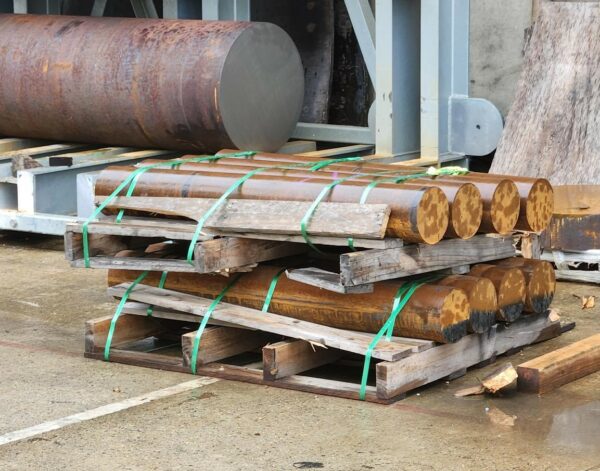
Timber pallets are designed for a wide range of general handling and storage applications. The problem starts when they’re repeatedly used for heavy, high-value or irregular components. The risks are amplified when they’re used for transport, not just storage. Timber can crack, split, warp and deteriorate with repeated use. Boards and fixings can also become damaged through forklift handling, lifting and exposure to the elements. A pallet might look perfectly serviceable one day and then become unsuitable after another heavy component is loaded onto it. In mining workshops, components sit in storage for extended periods before transport to another site or repair, causing problems. A timber pallet is also difficult to standardise. Its condition changes over time, and its ability to support a particular component can depend on the construction and condition of the individual pallet. For heavy components, the uncertainty with timber is a problem.
Cheap Pallet Failure Equals Real Profit Loss
The purchase price of a timber pallet can make it look like the obvious choice. But in a real-world scenario where productivity and assets are at risk, the purchase price is only one part of the cost.
Consider a site working with a high-value component. If the pallet that holds the timber fails, you incur the cost of purchasing another pallet.
There may also be:
- Additional labour to move and re-handle the component
- Damage to the component or surrounding equipment
- Time spent finding another suitable pallet
- Delays getting the component to a repairer or site
- Additional transport or handling costs
- Disposal and replacement of damaged pallets
And if the component is critical to production, the cost of a delay can quickly dwarf the cost of the pallet. The cheaper pallet isn’t necessarily the cheaper logistics solution.
Imagine a heavy pump, gearbox or motor sitting on a timber pallet in a mine workshop. The team relocates the component to an off-site repair facility. However, during the journey damage or brinelling occurs as pallet boards have broken and the structure doesn’t fully support and cradle the asset.
Now operations must consider:
- The cost of repairs and rework
- Finding a replacement part
- Informing teams that there is a delay, causing downtime
- Searching for a new frame to transport the component back to the repairer
Transporting Risks and Inefficiencies with Timber Pallets
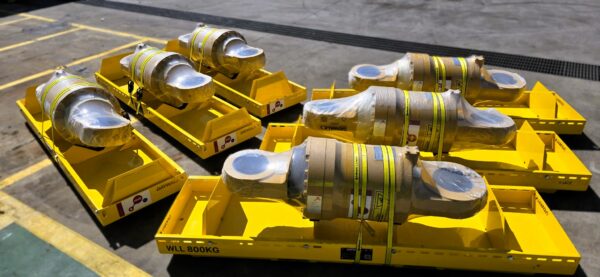
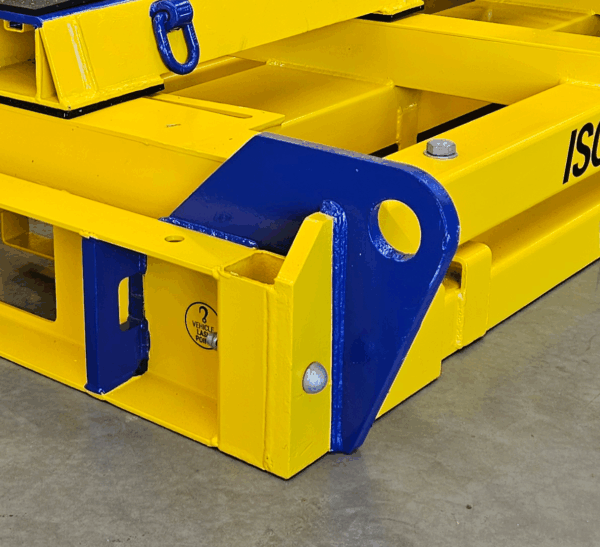
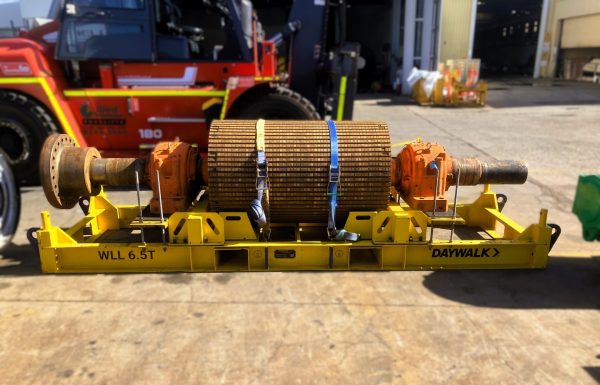
Storage and transport are two different requirements. A pallet that works for storing a component in a workshop isn’t necessarily the right solution for transporting it on a truck. During road transport of components, the load restraint system must withstand braking, acceleration and cornering forces. DAYWALK designs its certified steel pallets to support transport and storage. Features such as rated lashing points, forklift access and compatible restraint and chocking accessories can make it easier to create a repeatable system for securing heavy components. That’s a very different proposition from simply putting a heavy component on a timber pallet and hoping the pallet is up to the job.
Steel Pallets Aren’t Custom Jobs
Another misconception is that switching from timber to steel means commissioning a custom transport frame. However, when you choose DAYWALK’s standard, in-stock range of engineered steel pallets, you can get the right solution for your component, right away. These steel pallets provide fast solutions for different component weights, sizes and applications, with capacities from 1T up to 12T.
Our steel pallet ranges include:
Xyphos: the practical timber replacement
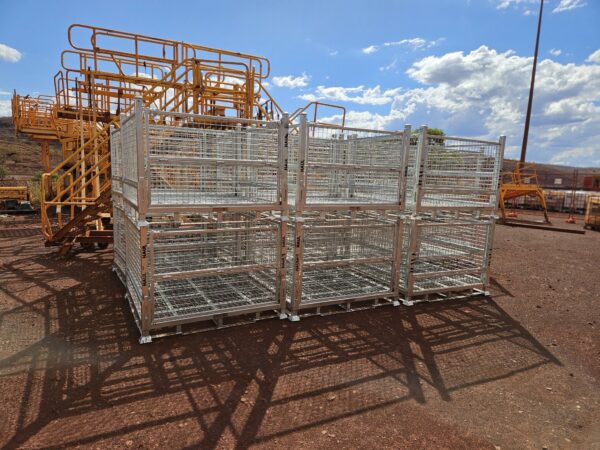
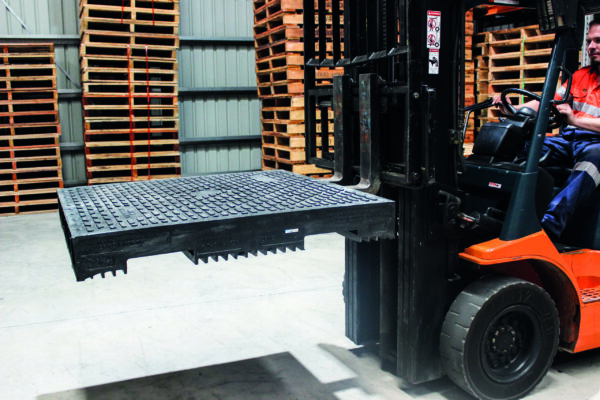
Xyphos offers a cost-effective alternative to timber pallets for longer-term storage and general handling. The standard Xyphos is a 4T pallet measuring 1160 x 1160mm, with a double-width 2300 x 1160mm option also available. The range is racking compatible and transport rated.
Spartan: more capability for heavier components
Spartan sits between Xyphos and the Heavy Duty range. The Spartan range covers 1T to 3T applications and includes mesh pallets with lashing points, four-way forklift access and designs suited to components that are too heavy for timber but don’t require a larger heavy-duty pallet.
Heavy Duty: for larger and heavier components, with adjustable chocks and stands
DAYWALK’s Heavy Duty Adapta range offers options from 3T through to 12T, with multiple pallet dimensions and modular accessories. With our adjustable accessories, you can configure these systems to fit awkwardly shaped components and high-value motors, gearboxes, shafts, pumps, and other heavy items.
So, Are Timber Pallets a Waste of Money?
Not always. If you’re moving a lightweight, low-value product once, a timber pallet may be perfectly adequate. But if you’re repeatedly transporting and storing heavy industrial components, timber can become an expensive choice. As you reuse a pallet more often, its durability, consistency and handling become more important. And when the component sitting on the pallet is worth tens of thousands of dollars (or more!), or is critical to keeping a mining operation running, the cost of a failed pallet can be far greater than the pallet itself. That’s why steel pallets can make financial sense. You’re not just buying a stronger pallet; you’re securing a reusable asset that can reduce pallet replacement, handling problems, component damage and operational delays.
Replace your Timber Pallets with DAYWALK Steel
DAYWALK has a range of pre-engineered steel pallets for industrial transport and storage, from the cost-effective Xyphos and Spartan ranges through to Heavy Duty and Adapta pallets for larger components. Many pallets are in stock and ready to go, offering you an alternative to repeatedly repairing timber pallets or waiting weeks for DAYWALK to design and manufacture a custom frame. If you’re regularly moving heavy components on timber pallets, talk to DAYWALK about switching to a reusable steel pallet solution. We can help you select the right pallet based on your component’s weight, dimensions, storage requirements and transport application. Explore DAYWALK steel pallets.