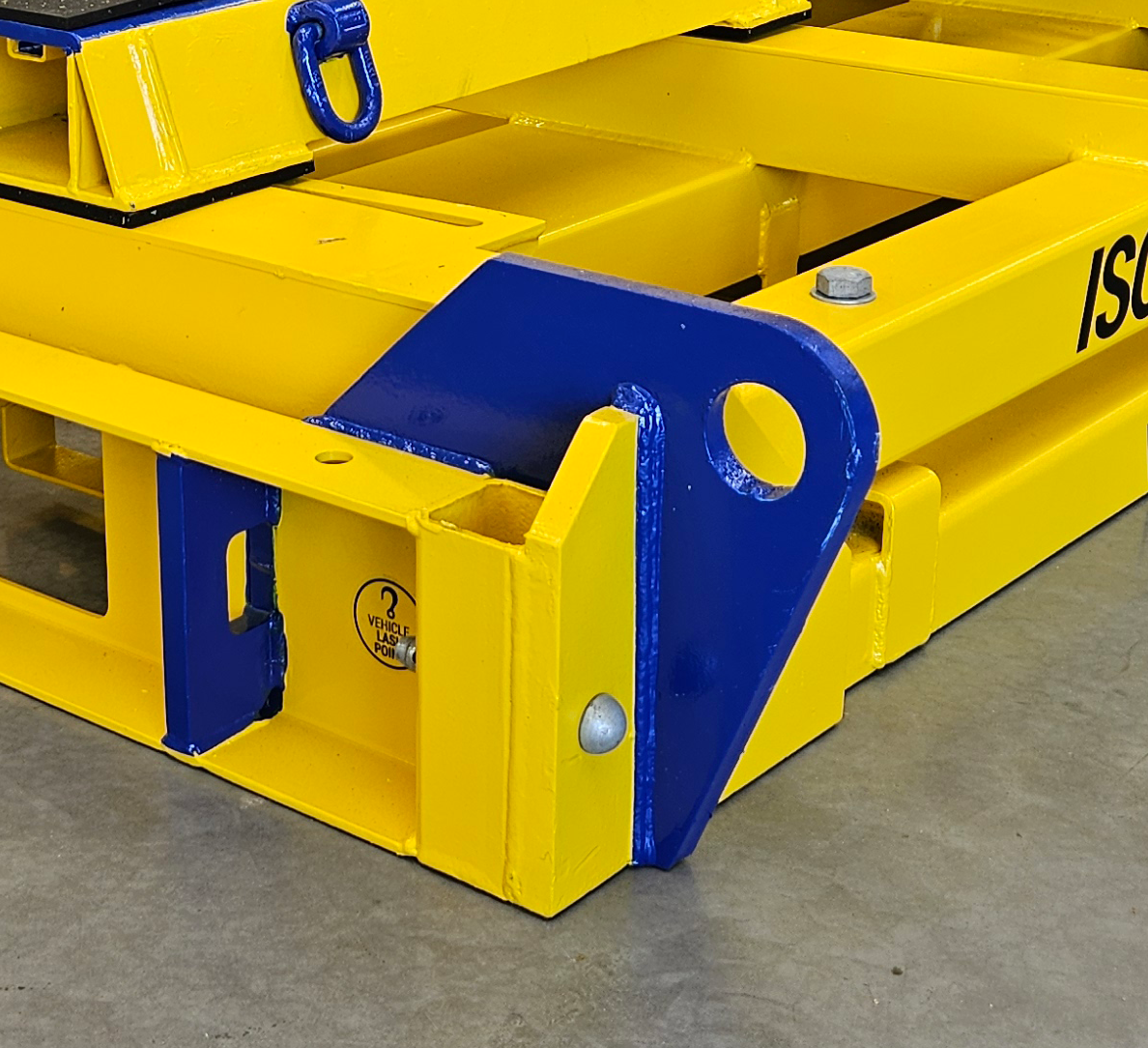
An elevated lash point is a specifically designed, high-strength attachment point that sits above the loading deck or frame, rather than being flush with the floor or sides. These elevated lashing points are also known as elevated tie-down points, raised or elevated anchorage points. The elevated lash point is designed for heavy-duty load securing to trucks, in situations where superior lashing angles are required.
How Can Elevated Lash Points Improve Load Restraint Safety?
Using a transport frame with elevated lash points provides practical advantages when it comes to restraining loads. This is particularly relevant in heavy transport, mining and industrial environments.
When lash points are elevated, the tie-down angle effect is more effective, due to the angle of the elevated lash point. The more vertical a tie-down angle is, the more effective it is for restraint.
Restraint forces act downward as well as inward. This creates a safer tie-down angle compared to flat deck points.
The elevated lash point and higher tie-down angle assist in:
- Increasing downward force on the load
- Reducing the risk of the component tipping or shifting
- Improving compliance with restraint guidelines
- Protecting the asset from damage during transport
- Provider greater ease for staff managing the loading and restraint
- Less risk of manual handling incidents and pinch points
- Reduction in vibration during travel
“Elevated lash points simplify restraint to the truck by easily providing greater lashing angles. It also saves sensitive jobs being damaged by eliminating over the top lashing for transport.”
– Sam Poikayil, DAYWALK Engineering Manager
What is a Lashing Angle?
A lashing angle is the angle between the lashing equipment and the deck. This angle affects a range of factors including the effective restraint of the load, the safety of staff and the ease at which they can load equipment or items for transport.
Benefits of sharper angles between 60-90% include:
Elevated Lash Point for Better Load Restraint Angles
Reduce load bounce and micro-movements through more effective restraint and tensioning. The elevated lash points can help improve the overall transport stability of the load. Reduced slack and movement are achieved with the elevated tie-down points, compared with the shallow strap angles of traditional flat lash points.
Protection Against Vibration
The elevated lashing angle also assists with vibration protection, though this is only one aspect of the protection. For high-value spares, we also recommend vibration damping frames that offer cutting-edge vibration damping technology to protect bearings from brinelling.
“Elevated lash points are best practice for items that get damaged due to vibration. Directly restraining a motor to a truck without elevated lash points will cause the vibration to go through the strap into the motor vs through the strap to the elevated lash point.”
– Byron Reilly, DAYWALK Technical Consultant
Safer Handling
Operators don’t need to reach underloads or work in awkward positions to secure restraints when transport frames are equipped with elevated tie-down points. That means less manual handling risk, faster load securement and reduced exposure to pinch points.
Elevated Lash Point for Easier Restraint
Chains and straps perform best within certain angle ranges. Elevated lash points allow you to achieve optimal lashing angles with ease, maximise the rated capacity of your restraints and avoid over-tensioning to compensate for poor geometry.
Compliance
Proper restraint angles and securement methods are key under the National Heavy Vehicle Regulator Load Restraint Guide. Elevated lash points help operators meet performance standards and adhere to best practice for load control. This improves safety and helps avoid any non-compliance issues or fines.
Why Are Elevated Lash Points Easier for Restraining Loads in Transport?
There are many reasons why elevated lashing points are ideal for transporting certain components, including:
- Optimal Angles: They are designed to increase the lashing angle. A higher angle (closer to 90 degrees) increases the vertical clamping force, making it more effective for holding down loads (tie-down restraint).
- Design & Placement: These points can be part of the chassis, side rails, or specially welded/bolted structures (like RUD lashing points) that allow for versatile, multi-directional lashing.
- Load Rating: Elevated points must be rated for specific tensile forces, often marked in decanewtons (daN), and should have a design factor of 2 against breaking.
- Elevated Lash Point Usage: They are essential when the load height exceeds the side walls of the trailer, requiring straps or chains to be secured higher up to avoid damage to the load or to achieve proper, compliant restraining angles.
- Prevents Slipping: By allowing for a higher lashing angle, they provide superior tension.
- Versatility: They allow for the use of chains or straps to be fastened securely at various heights.
- Increased Safety: They offer a secure, certified attachment point, reducing the risks associated with in-house or improper lashing solutions
What Types of Heavy Equipment Components May Require an Elevated Lash Point?
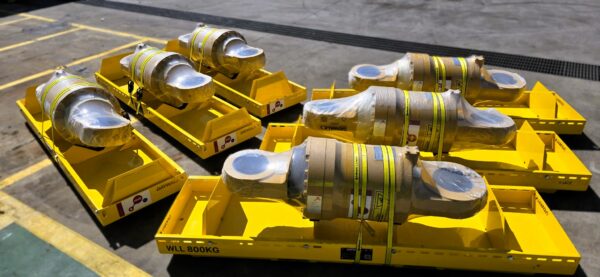
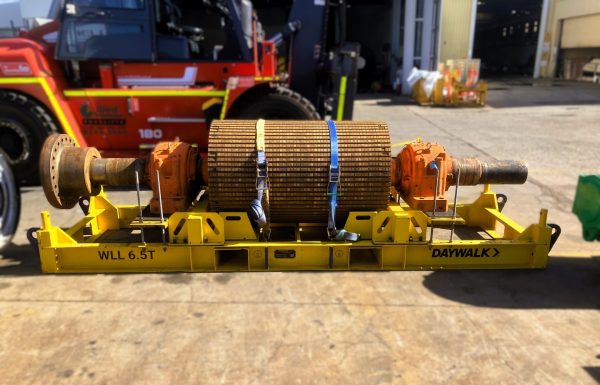
Irregularly shaped or oversized equipment benefits from this type of restraint point. DAYWALK offers a range of solutions with rated elevated truck lash points, to ensure the compliant restraint of components.
Some types of components that are best suited to frames with elevated lash points include:
- Transporting heavy equipment motors
- Gearboxes
- Bare Shaft Pumps
- High-value components
Controlling Risk with Elevated Lash Point Frame
In high-risk industries like mining and heavy equipment transport, an elevated lash points can be the difference between a stable load and a costly, dangerous incident.
The lash point is just one aspect of component transport, with the durability of the transport frame, the suitability of the solution to the transported component, additional restraints, the quality of the strapping, and the methods of restraint all relevant to the safety of the load.
Resources for Safe Load Restraint in Australia
There are many resources available to assist with the safe restraint of equipment and components travelling by road.
These include:
NHVR – National Heavy Vehicle Regulator
- Load Restraint Guide 2025
- Loading Performance Standards – Within Schedule 7 of the Heavy Vehicle National Regulation
- Loading Guide – Lashing Angle – Within the Load Restraint Guide
National Transport Commission
IMPORTANT: Follow the DAYWALK load restraint guidance for drivers and users that is specific to your frame. By adhering to this guide, you can help ensure that all restraint measures are suitable and safe for your component. We offer QR guidance or personalised support across our product range. Talk to us about your component transport frames today.
Elevated Lash Point: Easier, Safer Load Restraint
If you’d like to learn more about restraining your high-value components for transport, talk to our Technical Consultants at DAYWALK. We provide pre-engineered and custom frames that make the loading, unloading, restraint and transport of high-value components a simpler and more efficient task. Find out how we can improve the safety and efficiency of your component logistics.