Pulleys are mechanical components used primarily to drive, tension, and guide conveyor belts that transport bulk materials like ore and coal. Pulleys ensure the efficiency, tracking and continuous flow of materials. In this article, we look at the challenges associated with pulley transport and storage, and offer solutions to reduce handing issues, non-compliant transport and inefficiencies with the process.
What Are Pulleys Used For?
In the most basic sense, a pulley is a device that allows lifting and moving of items. As an essential metal component, pulleys are used in conveyors to enable movement, reducing downtime in harsh conditions. The parts of a conveyor pulley include the shell or drum, the central shaft which supports the end discs, locking hubs, bearings and housing. The pulley looks like a cylinder with an axle through the middle, which makes it a large, rounded and awkwardly shaped component to handle or move.
Why is Transporting a Conveyor Pulley Difficult?
But when you’re transporting pulleys, it can be difficult due to the cylindrical shape and protruding elements of the heavy equipment component. This article looks at how to transport a pulley, and offers best practice for preparing, loading and restraining the pulley for efficient and safe transport.
The pulley is generally a large cylindrical component, with a metal rod through the pulley shaft. The weight, size and shape of the pulley can make them difficult to transport or store, bearing in mind that the pulley can easily roll or move when it’s in transport, impacted or through vibrations.
What Industries Need to Transport and Store Pulleys?
Pulleys are required across a variety of industries, including mining, oil & gas, agriculture, construction, marine, manufacturing and automotive industries to name just some of the applications. Pulley manufacturers must also face the challenges of preservation, rust prevention, storage and transport.
Challenges with Pulley Transport
Pulleys can be difficult to transport because of their shape, weight distribution and sensitivity to damage.
Here are the main challenges businesses face when storing or transporting pulleys:
- Awkwardly shaped component: Large pulleys are round and uneven, making them prone to rolling or shifting during transport if not properly restrained.
- Heavy concentrated loads: Much of the weight sits in a compact area, creating high point loads that can damage pallets, timber skids or container floors.
- Damage to lagging and bearings: Rubber lagging, machined surfaces and bearing housing can easily be damaged by impact, vibration, moisture or incorrect lifting methods.
- Difficult lifting and handling: Standard forklifts or slings may not safely support the pulley’s centre of gravity, increasing the risk of unsafe lifts or dropped components.
- Restraint compliance: Securing pulleys for road transport can be challenging due to their tendency to move or rotate. They often require engineered restraint systems or dedicated transport frames.
- Pulley storage & preservation issues: When pulleys sit in yards for extended periods, exposure to weather, dust and moisture can lead to corrosion or deterioration before installation.
- Inefficient stacking and space use: Because pulleys are circular and bulky, they don’t stack efficiently, which can waste valuable freight and warehouse space.
Solving the Frustration of Pulley Transport & Storage
Pulleys might look simple enough sitting in the yard, until it’s time to move them. Then the fun begins. These critical components are heavy, awkward and prone to rolling.
One bad lift, rough trip or poor restraint setup can mean damaged lagging, worn bearings or a pulley that turns up less than site ready. And pulley storage can be just as frustrating.
Pulleys are hard to handle and transport as they:
- Take up valuable floor space
- Can’t be stacked with regular frames
- Are prone to corrosion and deterioration if exposed to elements
- Difficult to handle or lift safely
- Surface of the wheel can be damaged in storage or transport if not protected
- Vibrations or impact can cause brinelling of bearings
- The axle protrudes, which requires support for transport
Add in the challenge of finding safe lifting points and compliant load restraint, and suddenly a “simple” component becomes a logistics headache.
That’s why purpose-built transport and storage frames make such a difference. Better handling. Safer lifting. Less movement in transit. And far less chance of your pulley arriving damaged, rusty or buried somewhere in the yard when you need it most.
Pulley Transport for Fixed Plant
When mining sites for fixed plant operations require the bulk transport of material, a conveyor belt system is employed. The pulley is a vital component within this system, which drives and supports the conveyor.
Pulleys can also be found in heavy equipment, such as winches, shaft elevators or cranes.
This is why many mining and industrial operations use engineered steel transport frames or cradles specifically designed for pulley transport and storage. These systems improve safety, prevent movement, reduce component damage and make lifting more efficient.
Options for Pulley Frames
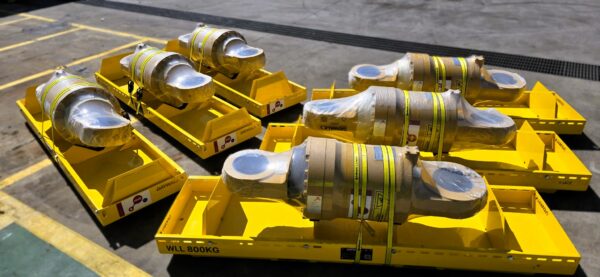
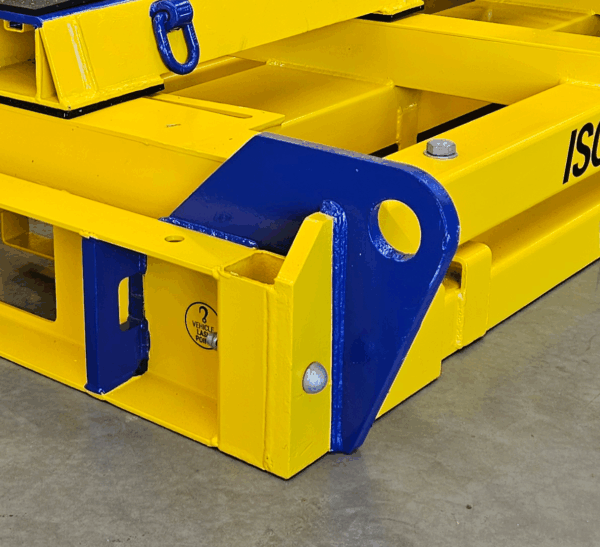
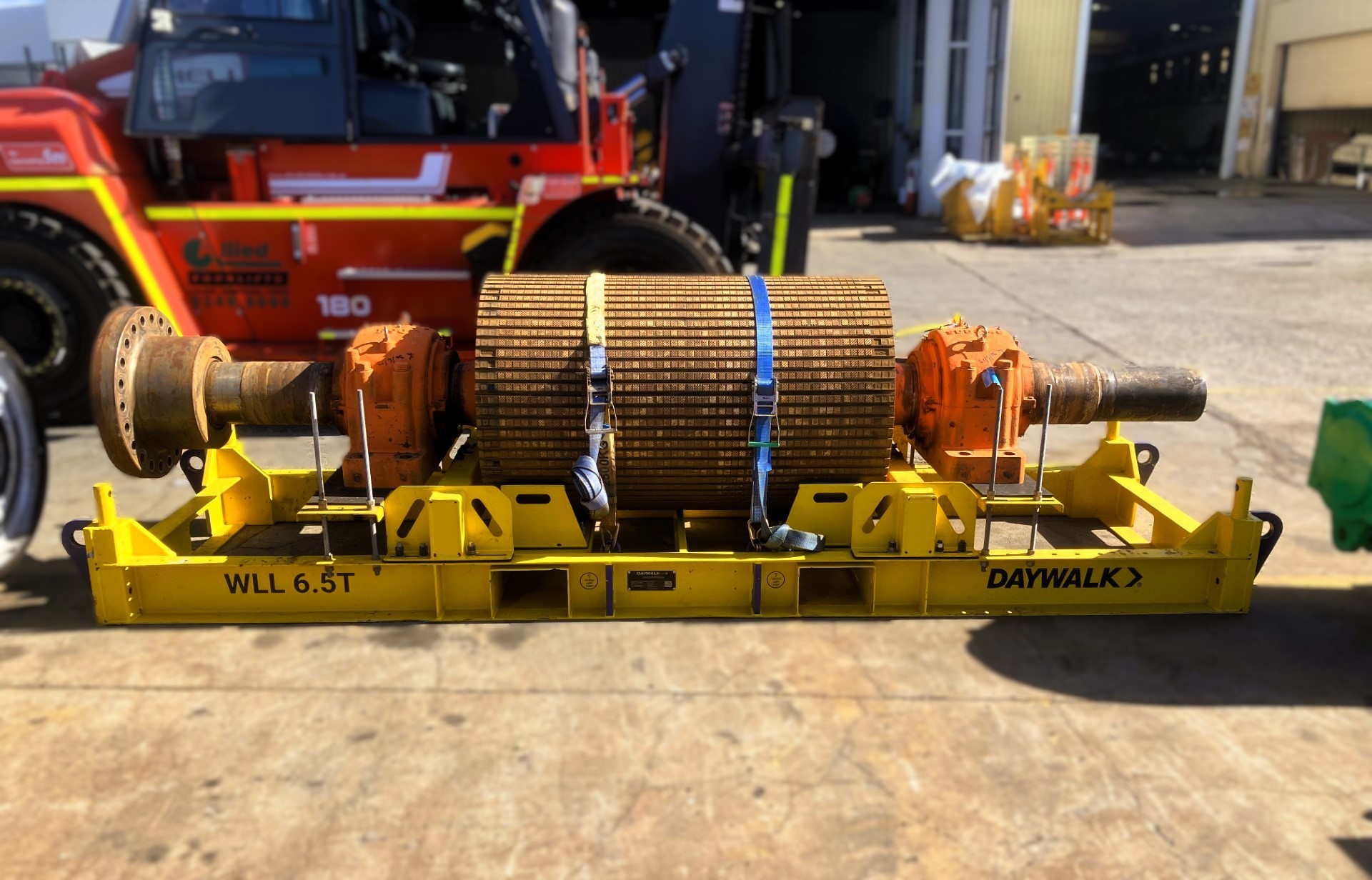
DAYWALK engineers a range of pulley frames to suit a range of sizes up to 12T. Standard products include the 6.5T Pulley Frame, with a 1T and 2T Pulley Frame also available. These component-specific transport frames feature adjustable rails, bearing support, end stoppers, load restraint rubber and anti-slip mats.
Wide fork pockets and a QR load guide allow operators to use the frame safely. The pulley frames are logistics engineering certified in compliance with Schedule 7 Performance Standards from the Heavy Vehicle National Regulation.
How to Hold a Pulley in Place?
Our range of pulley frames offer elevated lash points so you can quickly and safely restrain the pulley for transit. Unless standard lash points, the elevated solution allows better tension and restraint, so your awkwardly shaped component is kept in place.
The frame offers a range of features including adjustable chocks with rubber padding, to cradle the pulley for storage or transport. Add to this the end stopper which is built into the equipment to prevent any dangerous shifting when the pulley is in transit.
This pulley transport system offers efficiency gains, providing safe, compliant and cost-effective long-term solutions for a range of pulley sizes.
Using Certified Frames for Pulley Transport
Making pulley component transport and storage easy is our mission here at DAYWALK. Serving mining, oil & gas and other industries across Australia and the globe, we offer pre-engineered pulley frames to reduce your transport challenges. Talk to us about a solution for your site or fixed plant.