Warehouses are the hub of any business, tasked with ensuring stock gets where it should be, intact and on time. But when you’re working in such a high pressure, busy environment, it’s easy to lose sight of safety and inefficiency issues that may not be immediately obvious to warehousing staff. DAYWALK’s been providing warehouses with the equipment they need to run safe, efficient operations for over 10 years. In this article, we’ll be sharing some of the common hazards we see, and how they can be quickly prevented through storage improvements and space optimisation.
AUTHOR BIO: This blog was co-written with Marc Worldon, a Technical Consultant with DAYWALK. Marc has led the North Queensland team for over 5 years. He specialises in storage and preservation for mining warehouses and sites. When he’s not at work, you’ll find him on the golf course or with family and friends.
Common Problems in Warehousing
There are many hazards and inefficiencies in warehousing, but they can be rectified with the right set-up, equipment and staff training.
Some common problems we see at DAYWALK include:
- Goods not secured at height
- Unsuitable cages or pallets being unsafe in racking
- Operators not being aware of regulations pertaining to pallet racking
- Wood pallets breaking, causing hazards to staff and damage to equipment
- Inefficient storage and transport operations
- Fire risk not being adequately addressed
Let’s break these down to understand how to quickly rectify these potential efficiency and safety issues.
Challenge: Securing Goods at Height
If goods are stored at height (more than shoulder height) in a warehouse, then it’s considered best practice that the goods must be strapped or wrapped to the pallet. This is a risk control to stop items falling off a pallet and causing injury to workers.
Many people aren’t aware that the goods must not only be strapped or wrapped to keep the items together — but they should also then be strapped securely to the pallet to prevent them sliding or falling off. This is not only a key DAYWALK recommendation, but an industry safety expectation for warehousing.
Imagine a pallet, laden with metal components that are wrapped and strapped – but not to the pallet, becoming unstable during a forklift operation. If these items are stored kept even on the first rack, this could impact the workers in the area, causing serious injuries.
But what if these components are held at height, with the weight of the items only exaggerated by the storage at heights? This is a serious incident and non-compliant practice that many warehouses don’t even know exists.
When storing at height, the items must be strapped to the pallet or shrink-wrapped goods strapped to the pallet. However, there are other ways to store safety at heights without the need for manual labour.
Solution for Storing Goods at Height in a Warehouse
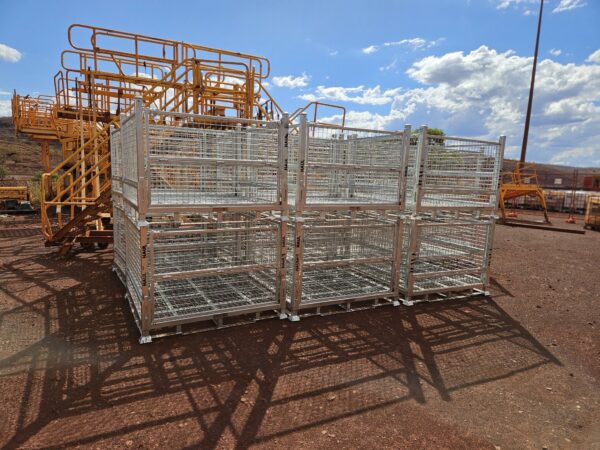
We recommend using racking compatible cages to prevent items falling from pallet racks. They are not only a durable and safe option, but they reduce the need for gear to be strapped or wrapped.
These DAYWALK designed cages are built with a number of safety and efficiency features including:
- Heavy duty or galvanised available for longevity
- Visibility and security with steel mesh sides
- Mesh or sheeted floor depending on your component storage needs
- Removable half fold-down gates for access
- Cambered safety under-rail to ensure safe manoeuvring at heights
- Cages can be stacked 4-high on the warehouse floor
- Pallet racking compatible, with 2- or 4-way access depending on model
- Suitable for forklifts or pallet jacks
SAVE TIME WITH STRAPPING: If you are using pallets in your warehouse, do you have a suitable strapping system? We offer semi-automatic and automatic strapping kits so you can cut down your strapping time. If you’re wrapping items that are prone to rust, consider our VCI wrap for optimum rust protection. This is particularly beneficial when storing high-value components for periods of time.
Challenge: Timber Pallets Failing in Warehouse Storage or Transport
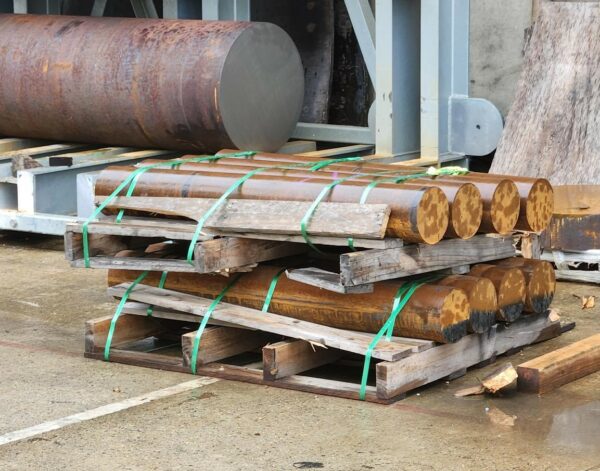
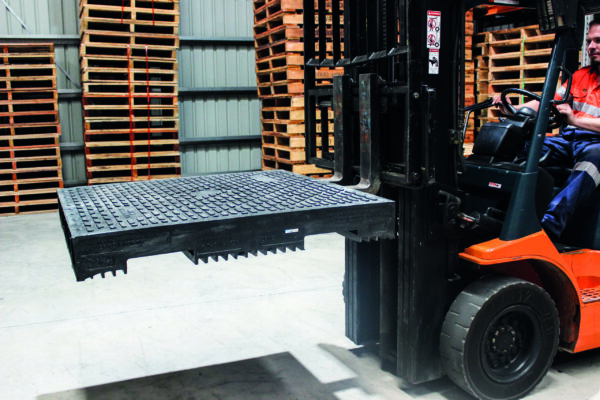
Warehousing relies on pallets for storage and transport. But timber pallets aren’t always the best long-term solution for both your pocket, efficiency or safety. With a much shorter lifespan than steel pallets, timber pallets require maintenance or replacements. This can also lead to issues involving staff accidents with boards breaking, or damage to racking if it’s not moved correctly.
The stored components can also be damaged when pallets aren’t right for the application, with aging, damaged or weak pallets resulting in component damage. In addition to these hazards, pallets also take up a lot of floor space – which is generally at a premium in busy warehouses. Getting your gear off pallets and into racking or stackable storage is a better option.
Alternatives to Timber Pallets
With our tiered offering, DAYWALK has a range of certified steel pallets to suit all your transport or storage requirements. Our Xyphos Cage was designed to be an economical and sustainable storage alternative to timber pallets, lasting approximately 25-30 years when compared with a 6-month lifespan of a timber. Xyphos won’t rust from the inside, which means latches and components won’t cease up, causing issues with warehouse operations.
They can also be stacked 4-high while loaded up to 1T per unit in your warehouse and are compatible with competitor’s cages, so you don’t have to overhaul your whole storage system.
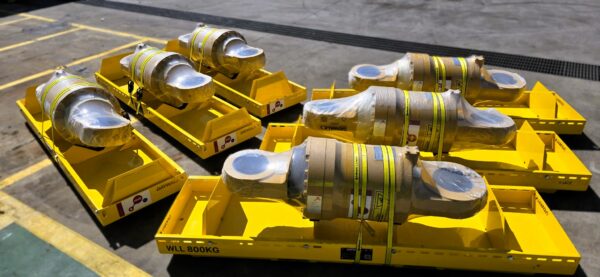
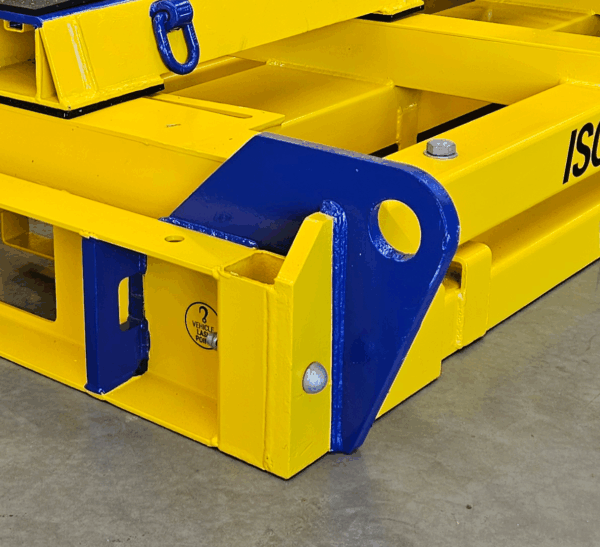
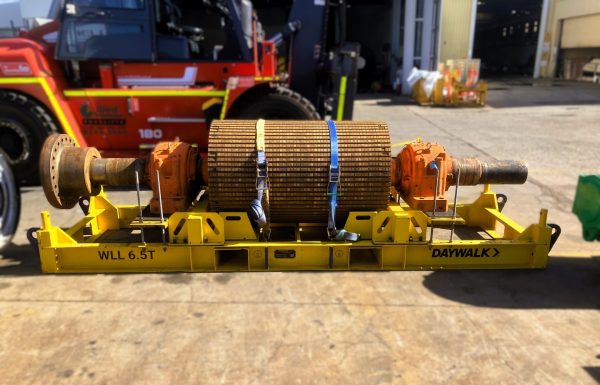
LOOKING FOR CERTIFIED TRANSPORT PALLETS? If your pallets are doing double duty as a transport and storage solution, DAYWALK has tiered options to suit every requirement and price-point. Talk to us about our component transport frame and steel pallets today.
Challenge: Fire Hazards in Warehousing
When you’re working with millions of dollars of inventory in your warehouse, fire prevention is a key concern.
If warehouses are full of inventory — all stored on timber pallets — it heightens a potential fire risk. Having clearly marked, organised storage systems can help control fire hazards. Particularly if you’re eliminating or minimising the amount of timber kept in your warehouse.
Steel Cage or Pallet Storage
Fire hazard reduction through the use of steel pallets or cages is considered best practice for warehouse safety. Removing the fire risk in warehouse gives customers the ability to review insurance, so it’s worth considering this when selecting storage systems.
Warehousing Tips
If you’d like to learn more about the storage, preservation and transport solutions available for warehouses, get in touch with Marc and our team of Technical Consultants. We work with warehouses across a range of industries, improving speed, safety and agility through better storage solutions.