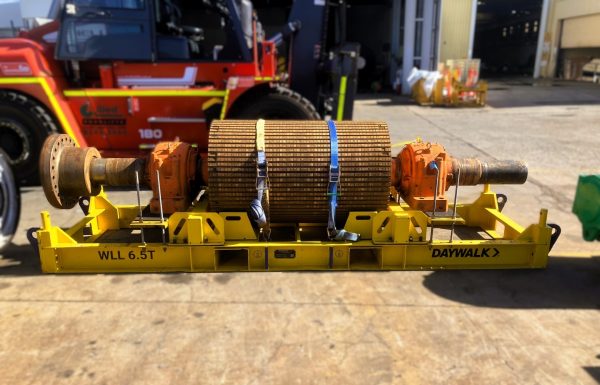
When transporting large bundles of components, heavy parts, materials, and products over long distances, you require strapping to hold the cargo in place. This is particularly true when large loads are involved and conveyed on flatbeds such as timber, steel beams, transformers, round cement conduits, and the like. There are a number of materials used to make straps that hold down cargo loads. Aside from rope, the most common strapping used in transporting cargo is polypropylene straps, steel straps, and polywoven straps. This article breaks down polywoven vs steel strapping in terms of safety and performance.
What is a Polywoven Strap?
Polywoven strapping is actually woven polyester strap that gets its strength from the polyester fibre in the strap that is woven together. A stiffening agent is added to make it rigid enough for industrial use. Woven polyester strapping equals the breaking strain strength of steel or metal strapping, making it a durable and safer alternative strapping to handle as it has no sharp edges.
Advantages to Using Polywoven Straps
When securing heavy components for transport or storage at heights, the right restraint method can make handling safer and more efficient. Lightweight, high-strength materials can provide a practical alternative to traditional metal strapping, particularly where loads are exposed to moisture or require frequent handling. Unlike steel, poly-based restraint materials won’t rust or corrode, making them well suited to demanding industrial environments. Efficient restraint can also reduce time spent preparing components for transport. Reusable equipment, compatible tensioning tools and a consistent application process can help teams secure loads quickly and repeatably across workshops, warehouses and transport operations. DAYWALK supplies load restraint solutions for mining, heavy industry and component transport. with solutions selected around the load, handling requirements and transport conditions. If you’re looking to improve how heavy components are prepared and secured for transport, explore DAYWALK online for transport frames and component handling solutions.
Safety of Polywoven Straps
When comparing rolls of polywoven and steel straps, polywoven is much lighter. Steel straps have sharp edges, while polywoven straps have dull edges, making polywoven safer
Using polywoven solutions also reduces cuts and damage to your team, as well as items such as forklift tyres. Once polywoven straps have been removed from the cargo, workers can quickly gather this up by bundling them and disposing of them for recycling. Furthermore, steel strap is given to ‘flicking’ when being cut, increasing potential injury with steel strapping coming into contact with body parts.
Performance and Durability
Polywoven has the strength properties of steel and performs with excellent elongation and retention characteristics, so the straps adjust and stay tight even when the load contracts or expands. These characteristics help the straps absorb impact without breaking or losing their retention. This makes polywoven ideal for lumber loads and other roundish cargo loads. Polywoven is even resistant to the elements even when used to strap down loads in outdoor areas.
What is a Steel Strap?
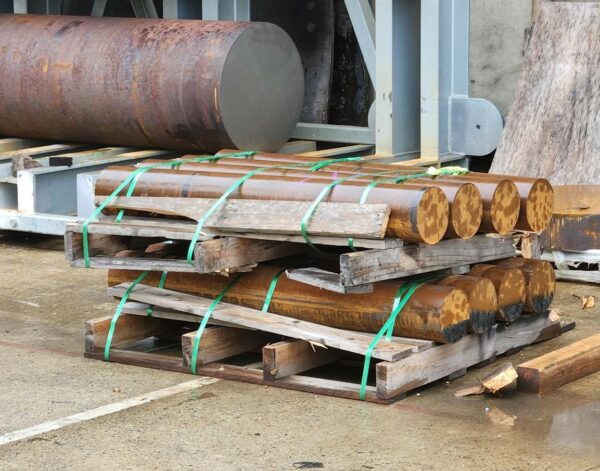
Steel strapping is high tensile strapping made from various steel alloys. Steel strap has a very high breaking strength, so it can hold heavy or bulky loads that have hard corners and sharp edges such as steel plates and beams. However, the steel’s rigidity will cause problems with loads that settle or expand while being transported. For instance, wooden logs can expand when they absorb moisture when it rains, causing the wood to crack or chafe.
If the straps are plain steel, they will be prone to rust and corrosion if used for outdoor purposes. Steel straps holding down metal cargo can transfer rust to the load, or vice versa.
Clearly, polywoven straps have the upper hand in advantages. Consider, too, using polywoven strapping if:
- You insist on a safety-first culture in your company
- You have heavier equipment which needs to be kept safe in transport
- You would like to prevent injury in your workplace
Choosing the Right Strap for Heavy Loads
For mining, industrial and heavy-component transport, choosing a strap isn’t simply about matching the strap’s break strain to the weight of the component. The required restraint depends on the load, the number and direction of lashings, pre-tension, friction, attachment points and the way the load is secured. Australia’s load restraint requirements are based on the performance of the complete restraint system, including the need to withstand forces of up to 0.8g forwards and 0.5g sideways and rearwards. Always select and use restraint equipment in accordance with the applicable load restraint requirements and the manufacturer’s specifications.
Load Restraint and Chain of Responsibility
Load restraint is also part of your Chain of Responsibility (CoR) obligations. Everyone involved in preparing, packing, loading, transporting and receiving heavy components can have responsibilities for ensuring the load is safely restrained. For industrial operators, that means considering load restraint before a component leaves the workshop or warehouse, not just when it reaches the truck. The right combination of strap, tensioner, buckles and restraint configuration helps protect the load, the people handling it and everyone sharing the road.
DAYWALK Strapping: Break Strain
DAYWALK’s Polywoven strap range offers various strap types to suit your requirements.
Polywoven Strap 19mm – 1000kg break strain
Polywoven Strap 19mm Hi-Vis – 1100kg break strain
Polywoven Strap 31mm Hi-Vis – 2300kg break strain
Our strapping systems make it faster and safer to strap your goods, with dispensers, polywoven tensioners and buckles for your strapping.
Need Help Choosing the Right Strapping?
If you’re transporting heavy components, machinery parts or irregular loads, our specialists can help you work through the restraint requirements. We can help you select the appropriate polywoven strap, buckles, tensioning equipment and load restraint system for your application. Visit DAYWALK to explore our Polywoven Straps and accessories.