While this everyday item may be overlooked in busy warehouses and industrial operations, industrial strapping plays a vital role in almost every trading business. Keeping items safe and secure, especially in the warehousing and logistics environment, these straps hold equipment and packaging in place to create a simpler and safer transport, handling and storage journey. Choosing an excellent strapping material is important for businesses, who need to protect their assets, staff and logistics operations from risk, damage and delays. Continue to read our article to learn more about selecting the right strapping materials.
Why Use Strapping?
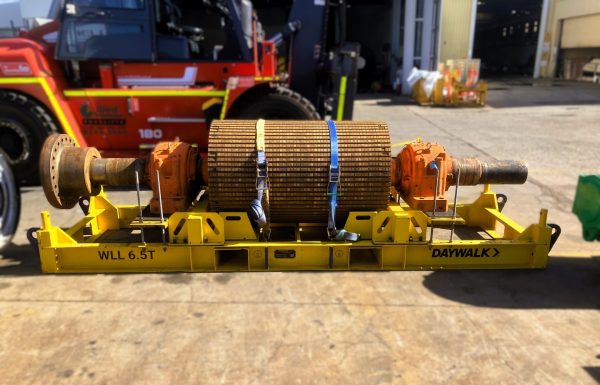
Strapping provides a simple way to keep equipment and components secure during transport, handling and storage. For industrial operations, it can help prevent components from shifting, rolling or moving when they are being transported by truck, lifted by forklift or crane, or stored on a pallet or transport frame.
For heavy and valuable components, movement during transport can lead to impact damage, scratches, dropped loads or damage to the component itself. The right restraint system helps keep the load stable and in the correct position throughout its journey. Strapping can also make handling safer by helping to keep components contained and reducing the risk of movement during lifting or relocation. When used with an engineered transport frame or steel pallet, it forms part of a complete load restraint system designed around the component and its handling requirements.
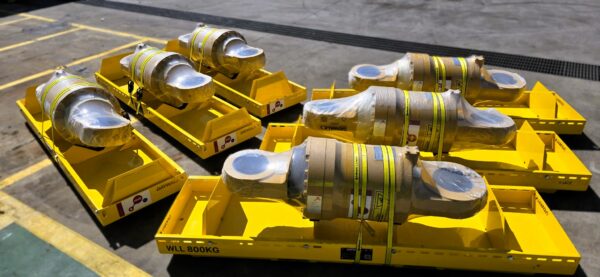
For DAYWALK applications, strapping can be used to secure components such as motors, gearboxes, pumps, actuators and other critical spares. It is particularly useful where components are regularly moved between workshops, warehouses, mine sites and repair facilities.
Using the right strapping system can help:
- Prevent component movement during transport and handling
- Reduce damage caused by shifting, impact or vibration
- Keep loads secure on transport frames and steel pallets
- Improve handling safety when moving heavy components
- Protect components during storage and relocation
- Reduce unnecessary handling and downtime caused by damaged or unsecured equipment
The key is choosing a restraint that is suitable for the weight, shape and value of the component, as well as the transport conditions and environment in which it will be used.
Examples of Common Strapping Materials
Different strapping materials are suited to different loads, environments and transport requirements. In industrial operations, the right restraint needs to do more than simply hold an item together; it needs to help keep heavy components secure during lifting, transport and storage. Common strapping and restraint materials include nylon, steel, PET strapping, corded, polywoven strapping, polyester, polypropylene, paper and composite restraints.
For component strapping and restraint applications, PET safety strapping and polywoven restraint systems are commonly used to secure components to transport frames, steel pallets and storage equipment. The right strapping system depends on the weight and shape of the component, how it will be transported, the expected movement or vibration, and whether it will be stored indoors or exposed to the elements.
For heavy industrial components such as motors, gearboxes, pumps, actuators and other critical spares, choosing the correct restraint is particularly important. Strapping needs to work with the frame or pallet to prevent movement without damaging the component, while also allowing it to be safely handled and retrieved when required.
Types of Straps for Bundling
Not all strapping is designed for the same job. For heavy industrial applications, the strength, flexibility, resistance to weather and ability to maintain tension during transport are all important considerations. The following materials are ranked broadly by their suitability for heavy-duty component transport and storage, from the most suitable to the least suitable. The right choice will ultimately depend on the weight, shape and handling requirements of the load, as well as safety and handling considerations.
1. Steel Strapping
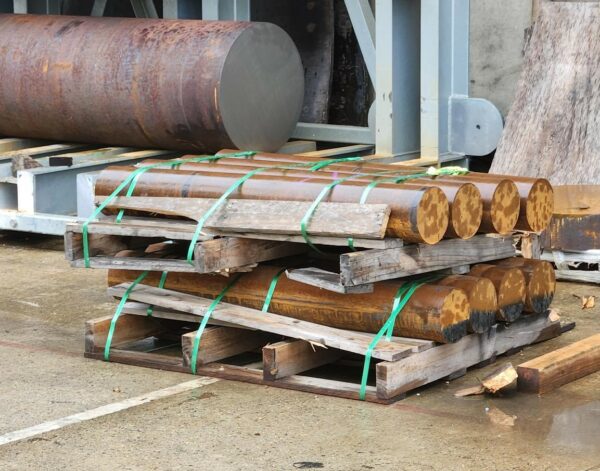
Steel strapping is one of the strongest options for securing heavy, rigid loads and has long been used for demanding industrial applications. It provides high tensile strength and holds its shape under heavy loads, making it suitable for bundling and securing large or heavy components.
However, steel strapping is less flexible than synthetic alternatives and can be difficult and dangerous to handle. It can also damage painted or finished surfaces if used incorrectly and may be susceptible to corrosion depending on the material and environment. For component restraint applications, steel strapping may be considered where high-strength restraint is required for heavy-duty loads, provided it is suitable for the component and handling conditions.
2. PET Strapping (Polyester)
PET strapping is a strong and versatile option for industrial applications. It provides good tensile strength while offering more flexibility than steel, allowing it to absorb some movement during handling and transport.
PET is also rust-free and resistant to moisture, making it well suited to industrial environments where components may be exposed to changing conditions. It can be used to secure components on transport frames and steel pallets without the corrosion concerns associated with steel strapping. PET strapping is particularly relevant where heavy components need reliable restraint without adding unnecessary weight or creating a risk of corrosion.
3. Corded and Woven Strapping
Corded and woven strapping is generally made from high-strength synthetic fibres, commonly polyester. Its woven construction provides flexibility while maintaining good strength, making it useful for securing irregularly shaped or sensitive loads. Compared with rigid steel strapping, woven systems can conform more easily to the shape of a component and are less likely to damage painted or finished surfaces when correctly applied.
This makes corded and woven restraints useful for industrial components that require secure restraint without rigid contact points, particularly during transport and handling. DAYWALK’s polywoven strapping systems offer a secure and stabilising solution that’s easy to handle, particularly when used with tensioners, polywoven strapping dispensers, phosphated buckles, strapping lances and other useful strapping tools.
4. Nylon Strapping
Nylon webbing is a strong and flexible restraint material that can conform to the shape of equipment while maintaining tension around the load. Its flexibility makes it useful where components have unusual shapes or where a rigid strap could cause damage. Nylon can provide excellent restraint when correctly selected and applied, although its performance can vary depending on the specific webbing, environmental conditions and application.
For industrial transport, nylon webbing can be useful for securing components to frames, pallets and other handling equipment, particularly where flexibility and reusable restraint are important.
5. Polypropylene Strapping
Polypropylene strapping is lightweight, economical and resistant to corrosion. It is commonly used for bundling and securing lighter loads and is available in a range of widths and thicknesses.While it can be useful for general warehouse and packaging applications, it is generally less suited to the heavy-duty restraint of large industrial components than steel, PET or high-strength woven systems.
For DAYWALK applications, polypropylene may be appropriate for lighter-duty bundling but would not normally be the first choice for securing heavy mining and industrial components during transport.
6. Paper Strapping
Paper strapping is primarily suited to lightweight packaging and bundling applications. It is easy to remove and can be customised for branding, making it useful in some packaging environments. However, its strength and resistance to moisture are significantly lower than heavy-duty synthetic and steel alternatives. It can deteriorate when exposed to moisture and is not designed to restrain large or heavy industrial components. For this reason, paper strapping is generally not suitable for heavy-duty component transport or storage applications.
What Points to Consider When Selecting Straps for Load Restraint
When choosing for the appropriate strapping system, always consider the following:
- Size of package
- Type of item
- Climate of area
- Type of transportation used for delivery
- The price of tools
- Environment-friendly and sustainability
DAYWALK for All Your Heavy-Duty Industrial Strapping Needs
DAYWALK’s strapping systems are designed for industrial applications where components need to be securely restrained during transport and storage. Combined with engineered transport frames and steel pallets, the right restraint system can help reduce movement, damage and unnecessary handling throughout the logistics process. Selecting the right DAYWALK strapping system can help improve the efficiency and safety of your warehousing, storage and logistics operations. It protects the goods and can prevent you from paying extra costs if mishaps occur.