Protecting component bearings in transit avoids costly rebuilds, commissioning delays and equipment downtime. Large bearing replacements can spiral into the tens or hundreds of thousands when factoring in associated labour and downtime. However, to mitigate the issues, many mega miners and OEMs are now using damping rated frames for their high-value components. This article explains how vibration damages bearings and results in brinelling. We answer the question ‘why consider vibration damping transport frames‘ and look at how these solutions can protect your assets and maintain compliance.
Bearing Protection in Transport Matters
Real-world example: a 4-tonne pump set leaves an OEM workshop in perfect condition. Some weeks later, it arrives at a remote mine site. Before commissioning even begins, technicians discover brinelled bearings that require a complete strip-down and rebuild, delaying mining operations.
This scenario plays out regularly across Australian heavy industry. Modern supply chains may involve multi-modal journeys or travel on rough roads, with these journeys subjecting static bearings to repeated micro-impacts.
These impacts may not be recognisable to the transport operator, but they accumulate into measurable damage when the component is required for use.
Common Transport Risks for Bearings in Heavy Industry
The movement of oversized loads across challenging logistics networks has created risky conditions for high-value component transport.
Key scenarios which result in brinelling:
- Road irregularities
- Poor manual handling
- Vibrations during storage
The cost consequences are significant: with repairs, further transport, stripping or polishing labour, plus delays for operators that can extend to more than a month.
Warranty disputes frequently arise as OEMs attribute failures to transport despite evidence of brinelling patterns matching vibration spectra.
Understanding Brinelling
So, what is brinelling? And how does it relate to vibrations during transport or storage?
Brinelling is a permanent deformation or indentation of a hard surface. There are two types of brinelling: true and false brinelling.
What is True Brinelling?
True brinelling is caused by:
- Shock or excessive loads due to improper mounting
- Dropping of machinery during handling
- Excessive static or impact loads during operation
You can see true brinelling as regularly spaced indentations in the rolling elements.
What is False Brinelling?
False brinelling is caused by:
- Vibrations acting on the bearing in a non-rotating state
- Generally seen in new equipment due to inadequate transportation
You can see false brinelling as axial impressions.
Key Points to Consider with Vibration Damping
Unrestrained vibration during road, rail, or sea transport is a primary cause of premature bearing failure in large rotating equipment including:
- Pumps
- Gearboxes
- Motors
- Crusher Assemblies
- High-value spares
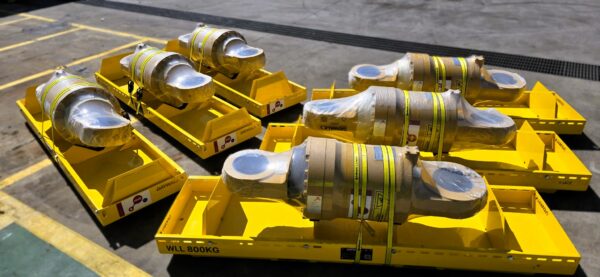
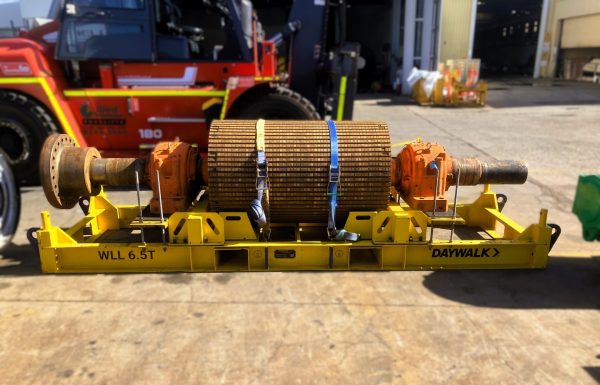
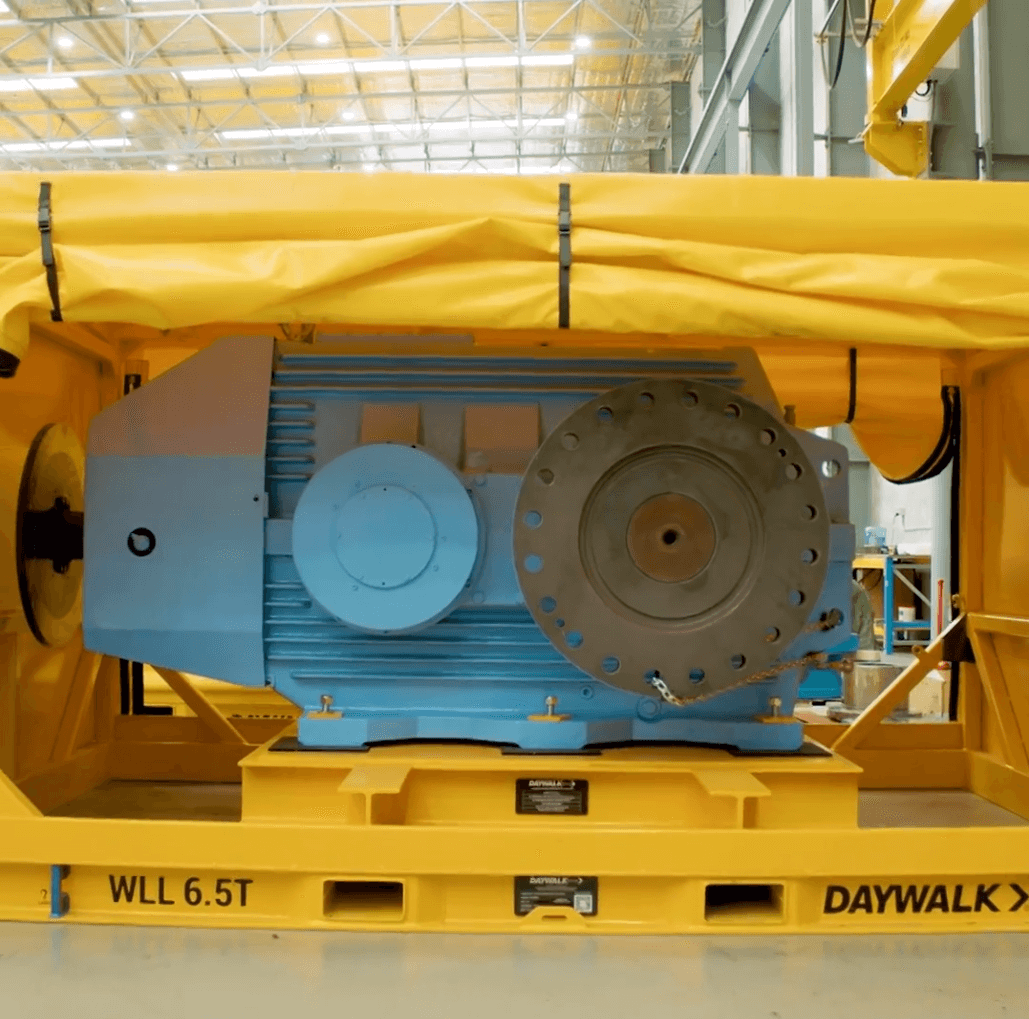
DAYWALK vibration dampening transport frames are engineered to absorb and isolate transport shock before it reaches bearing housings, using calibrated elastomeric interfaces and correct support positioning.
Vibration Damping Solutions from DAYWALK
Vibration damping frames are created with features to disperse energy, thereby protecting equipment in transport and storage from vibration.
Control methods for brinelling include:
- Lock down systems
- Restraint systems
- Vibration isolators
- Vibration dampers
DAYWALK uses a sophisticated lock down system, with vibration dampening, to provide optimum safety and protection for high-value components and spares.
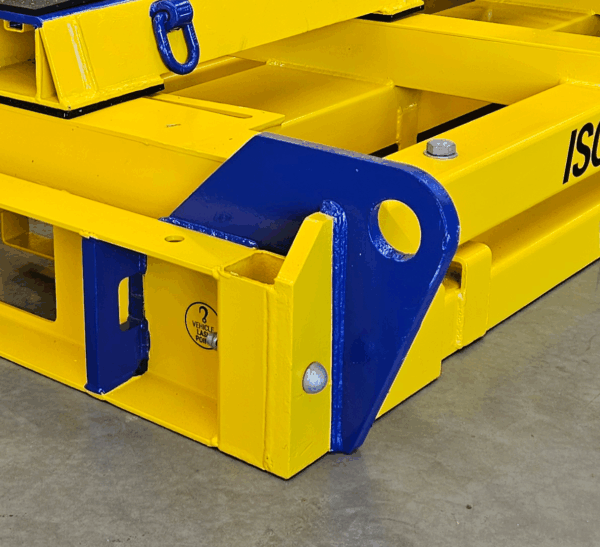
Solutions include the Iso-Porta Frames and Transporta Frames to suit fixed plant operations and other sectors managing the risk of brinelling.
Features of DAYWALK Vibration Damping Frames
DAYWALK’s inhouse engineers provide fit-for-purpose standard frames, with the option of further customisations.
Within the vibration damping solutions, there are two key options, offering either a vibration damping frame or all-in-one transport and storage product.
Explore the full range of DAYWALK Vibration Damping products online.
Key Design Features that Protect Bearings
Not all frames protect bearings. The detail of support and damping determines effectiveness.
Vibration damping features of DAYWALK frames include:
- Vibration damping built into the frame construction
- Standard damping rated solutions, with custom work also available
- Anti slip mats and high friction rubber for effective restraint
- External truck lashing lugs for extra safety during transport
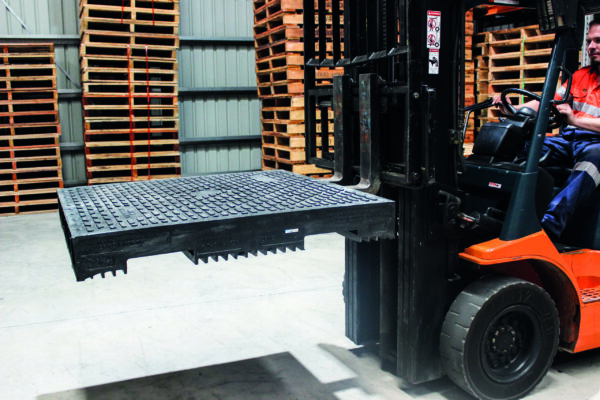
- Wide fork pockets to minimise rough handling
- Rated elevated lash points to ensure ease of operations
- Logistics engineering certification to the Performance Standards
- Compliant to AS 3990
Discuss Your Vibration Damping Requirements with DAYWALK
DAYWALK provides training and guidance notes for site and transport crews on correct lifting, securing, and inspection of frames to maintain bearing protection throughout the logistics chain. Using engineered, documented DAYWALK frames supports compliance with road and freight regulations, Chain of Responsibility obligations, and corporate risk standards.
Standardised dampening frames improve communication and accountability across logistics chains. Everyone sees intended lifting points, tie-downs, and support locations, reducing improvised field solutions that often damage bearings. Contact DAYWALK to discuss your next move. We service Australia, New Zealand, Asia-Pacific, the US and other key global projects.