Heavy component transport damage costs Australian industries millions annually — and that’s before you factor in the cost of downtime due to component repairs and transport delays. This article looks at the issues of heavy component transport damage, with 5 key points to consider when implementing equipment, procedures and strategies to avoid this in your own operations.
1. Timber Pallet & Crate Failure
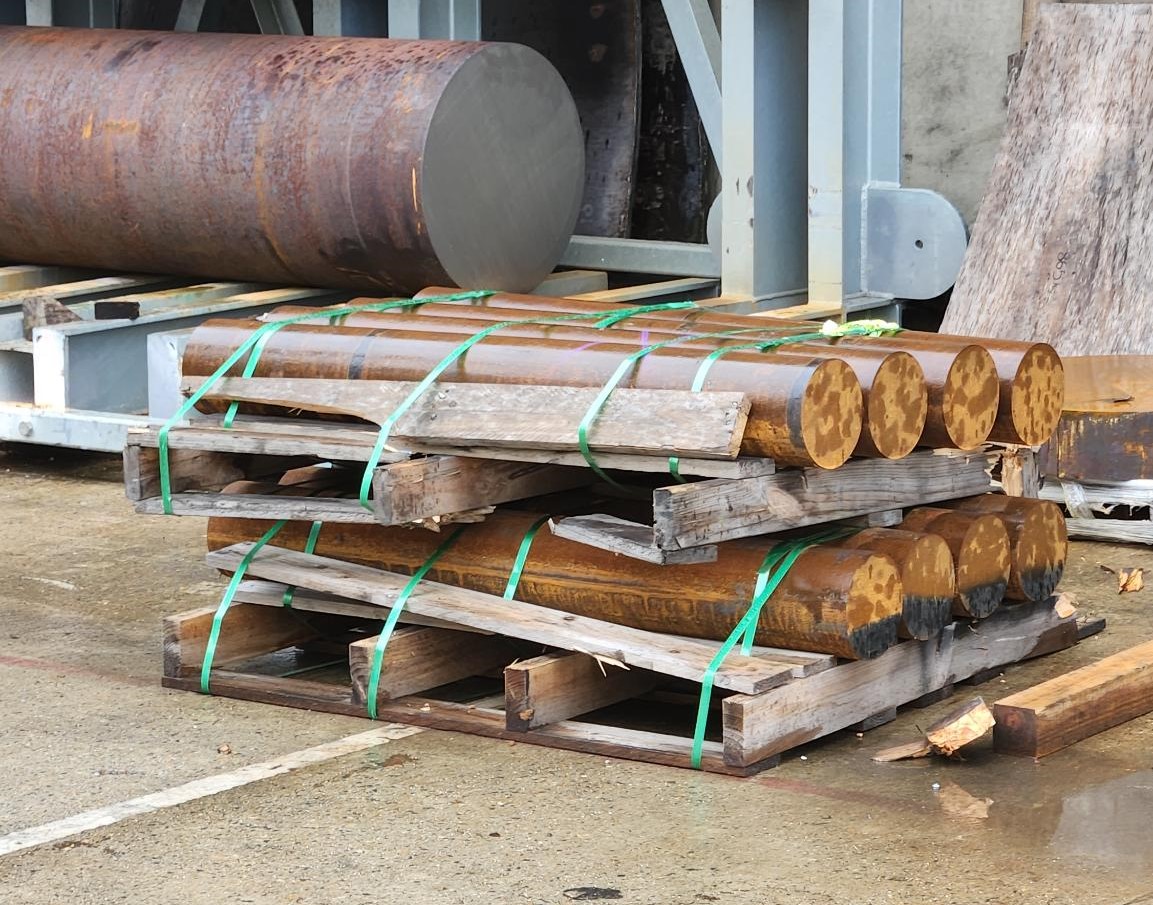
One of the most common causes of heavy component transport damage is the failure of the timber pallet or crate supporting the load. While timber pallets and crates have long been used across mining, maintenance and industrial supply chains, they are often not designed to withstand the weight, handling forces and transport conditions associated with heavy rotating equipment and critical components.
Unlike general freight, heavy components such as gearboxes, electric motors, pumps, hydraulic cylinders and mining equipment parts place significant loads on transport packaging. During lifting, handling and transport, timber structures are exposed to bending forces, impact loads, vibration and environmental degradation that can quickly compromise their integrity.
Issues with timber pallets can include:
- Broken or popped boards
- Cracked or collapsed timber skids
- Failure of timber restraint points during transport
- Structural weakening from moisture, rot or weather exposure
- Movement of components caused by pallet flexing
- Load shifts resulting from pallet or crate collapse
- Damage to components due to rusty nails or broken timber
The risks are amplified in mining and remote operations where components may travel thousands of kilometres across highways, rail networks, haul roads and ports before reaching their destination. A pallet that appears serviceable at dispatch can deteriorate rapidly when exposed to repeated handling events, vibration and harsh environmental conditions.
When a timber pallet or crate fails, the consequences can be severe. Components can shift, tip, fall or become impossible to safely handle. This results in equipment damage, safety incidents, transport delays and costly rework. The damage extends well beyond the pallet itself, affecting high-value assets worth tens or even hundreds of thousands of dollars — which creates a knock-on effect of downtime and project delays.
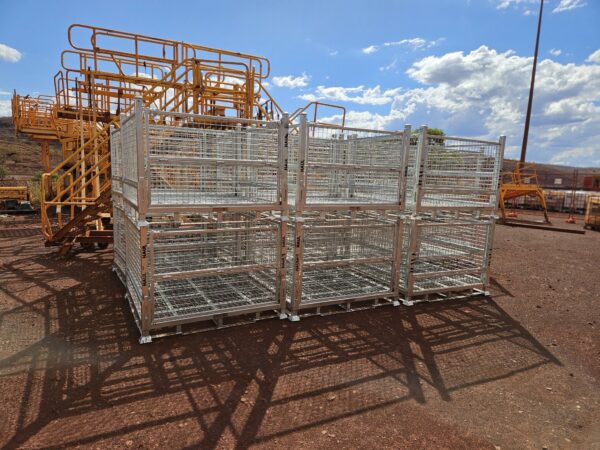
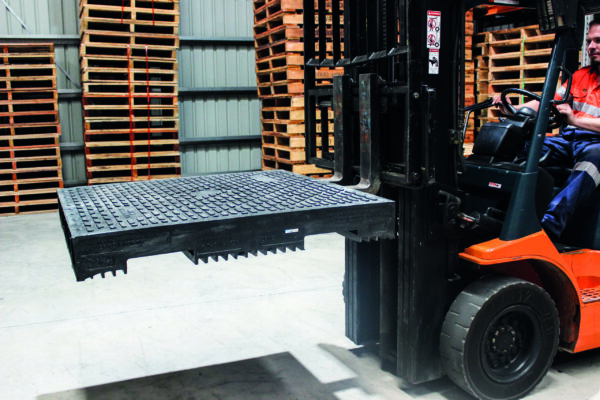
Engineered steel transport frames provide a more reliable alternative by eliminating the structural weaknesses associated with timber. Designed for repeated use, heavy loads and certified restraint systems, purpose-built transport frames help maintain load stability throughout the logistics chain while reducing the risk of transport damage, handling incidents and unplanned downtime.
DID YOU KNOW? Many heavy components weigh significantly more than the rated capacity of standard timber pallets. Even when custom-built, timber pallets can weaken over time through repeated use, moisture exposure and transport fatigue, making pallet failure one of the most overlooked causes of heavy component transport damage.
2. Rust During Transport or Storage
Environmental exposure during transport and component storage represents a persistent threat to heavy industrial components. As components traverse diverse climate zones, from coastal humidity to inland dust exposure, unprotected metal surfaces undergo accelerated oxidation processes that compromise structural integrity and operational performance.
Mining equipment, energy infrastructure components, and defence assets prove particularly vulnerable when preservation systems fail to address the harsh Australian environment. Components stored in yards or on vessels for extended periods face compounded risk, as traditional preservation methods require constant checking, re-oiling, and re-wrapping. These processes may be inconsistent and often prove inadequate for long-distance or multi-modal transport scenarios.
Rust or surface damage can occur when there is no or insufficient preservation for the environment and the humidity levels:
- Rust onset from exposure to moisture, salt air, or condensation during storage and transport
- Shrink wrap trapping moisture within the preservation material, instead of drawing the moisture away from the metal
- Accidental cuts in plastic pallet wrapping may allow moisture within, which can actually accelerate rust in humid climates
- Paint and protective coating breakdown leading to reduced corrosion resistance
- Dust, dirt and debris affecting precision assemblies before installation
Modern preservation technology addresses these challenges through engineered systems that provide continuous protection without manual intervention. Hot-dip galvanised transport frames resist corrosion themselves while supporting VCI protection systems that create invisible molecular barriers on component surfaces. UV-resistant outer covers protect against environmental damage during outdoor storage, while silica gel breathers and eco-friendly desiccants maintain controlled internal atmospheres.
IS YOUR RUST PREVENTION ACTUALLY WORKING? VCI films provide continuous corrosion inhibition without requiring manual reapplication, while outer wraps incorporate UV resistance and moisture barriers. The integration of these rust prevention technologies into component transport logistics offers optimum protection, regardless of the distance, duration, or environmental conditions encountered during transit.
3. Unsuitable Frames
A transport frame may appear robust enough to carry the weight of a component, but that does not necessarily mean it is suitable for transport. Poorly designed or incorrectly specified frames can allow excessive movement, create uneven load distribution, introduce lifting hazards, or fail to adequately support critical areas of the equipment. In some cases, the frame itself becomes the source of the damage it was intended to prevent.
Common issues associated with unsuitable transport frames include:
- Incorrect support points causing stress on critical components
- Excessive frame flex during lifting and transport
- Inadequate restraint and tie-down provisions
- Poor load distribution across the frame structure
- Lack of protection for vulnerable equipment surfaces
- Uncontrolled component movement within the frame
- Difficulty achieving compliant load restraint arrangements
- Damage caused during loading, unloading or storage
The risks increase significantly when transport frames are repurposed for components they were not designed to carry. A frame that performs well for one asset may be entirely unsuitable for another with different dimensions, weight distribution or lifting requirements. As equipment values continue to increase, even minor design shortcomings can result in costly repairs, rework and unplanned downtime.
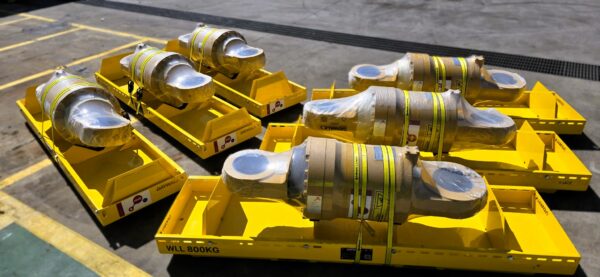
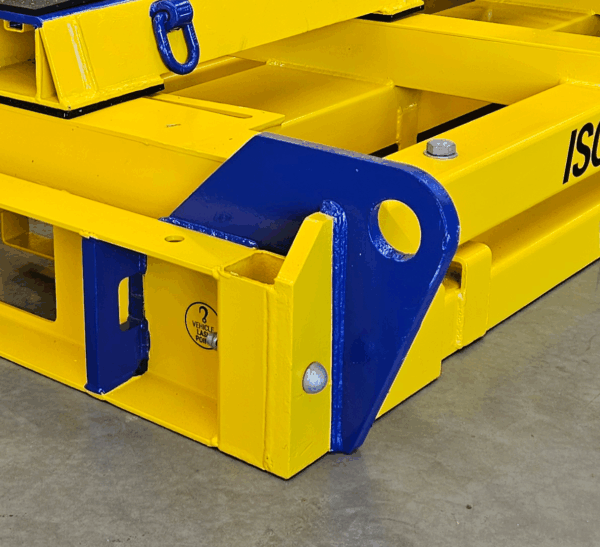
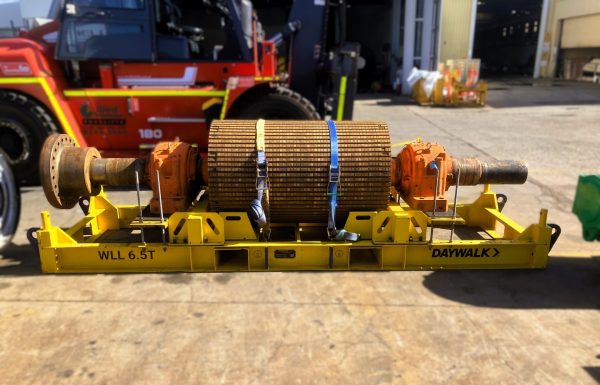
Purpose-designed transport frames, such as DAYWALK’s standard, pre-engineered range, help eliminate these risks by providing certified solution for a wide range of components. The frames offer a range of features to ensure efficiency and safety, including engineered lash points, certified restraint systems that meet regulations, and adjustable systems that protect equipment throughout the transport and storage cycle.
When the frame is matched to the component and operating environment, businesses can reduce damage, improve handling safety and move critical assets with greater confidence.
DID YOU KNOW? Effective transport frame design is about more than simply supporting the weight of a component, it must also account for lifting forces, load restraint requirements, transport vibration, handling methods and long-term storage considerations.
4. Ineffective Loading & Restraint
Many operators still rely on indicative load ratings or improvised restraint methods, rather than independently certified engineering solutions. While this may seem adequate, it can leave businesses exposed to unnecessary Chain of Responsibility risks and avoidable damage to high-value equipment.
The impact of poor load restraint goes well beyond dents and scratches. For mining operators and energy providers, damaged components can mean costly downtime, project delays, and disruptions to critical operations. For transport and logistics companies, it can result in compliance breaches, regulatory penalties, and damage to hard-earned reputations.
Developing a system of suitable transport frames and accessories that are loaded and restrained in line with best practice and safety recommendations, allows operations to move components more easily and with greater safety and confidence.
USER GUIDES: Were you aware that DAYWALK offers QR coded guidance on select frames, to assist with the loading and restraint of your high-value components? Simply scan the relevant QR code on your frame to access our tailored User Guides, which are developed in line with road safety standards.
5. Vibration Damage & Brinelling
Not all transport damage is visible when a component arrives at its destination. While major impacts and handling incidents are easy to identify, continuous vibration and repeated shock loading during transport can cause hidden damage that only becomes apparent when equipment is commissioned or returned to service.
Australia’s road network presents unique challenges for heavy component transport. Long distances, corrugated haul roads, rough access tracks, rail transport, vessel movements and repeated loading and unloading events all expose components to constant vibration forces. Over time, these forces can affect the integrity and performance of critical equipment.
Common forms of vibration-related damage include:
- Premature bearing wear and brinelling
- Loosening of fasteners and critical connections
- Damage to seals and gaskets
- Misalignment of shafts and rotating assemblies
- Fatigue cracking in frames, brackets and support structures
- Internal component movement during transport
- Reduced service life of repaired or overhauled equipment
High-value assets such as electric motors, gearboxes, pumps, generators and rotating equipment are particularly vulnerable. In many cases, vibration damage may not be discovered until the component is installed, resulting in costly troubleshooting, additional maintenance work and unexpected downtime.
Engineered transport solutions help minimise these risks by incorporating vibration damping systems, load-specific support points and certified restraint methods designed to isolate components from damaging transport forces. By controlling vibration throughout the logistics chain, operators can significantly reduce the likelihood of hidden damage and ensure equipment arrives ready for service.
DID YOU KNOW? Vibration damping transport frames are specifically designed to reduce the transmission of transport forces into sensitive equipment. For critical rotating assets, this additional protection can help preserve bearing life, maintain alignment and minimise the risk of costly failures after installation.
Preventing Component Transport Damage with DAYWALK
In many cases, component damage and safety issues arise not from negligence, but from uncertainty around regulatory requirements or attempts to reduce upfront costs with non-certified alternatives.
The reality is that the cost of getting it wrong is often far greater than the initial saving, with damaged equipment, extended downtime, operational disruption, and potential legal consequences all carrying significant financial impact. If you’d like to discuss how you can prevent component damage in transport and storage, get in touch with the DAYWALK team and learn more about our downtime solutions.